cropper
update

Strategy AdvantEdge Blog

update
  • Homepage
  • Contact Us
  • Content Marketing
  • Social Media Marketing
  • Website Design
  • Email Marketing
  • All Posts
  • SEO Optimization
  • Online Advertising
  • Reputation Building
  • Content Marketing
  • Social Media Marketing
  • Website Design
  • Email Marketing
June 20.2025
1 Minute Read

Digital Marketing for Small Businesses: Secrets to Growth

Did you know that small businesses using digital marketing report revenue growth rates up to 3.3 times higher than those relying solely on traditional channels? In today's digital-first world, mastering the right online marketing strategies isn't just beneficial—it's critical. In this in-depth guide, you'll uncover the proven secrets to leveraging digital marketing for small businesses —whether you're looking to accelerate your online presence, outpace local competitors, or turn curious browsers into loyal customers. Dive in to transform your business and discover what it truly takes to grow online, no matter your budget or experience.

Unlocking Potential: How Digital Marketing for Small Businesses Drives Extraordinary Results

At its core, digital marketing for small businesses is not just about having a presence online; it’s about creating measurable growth and new opportunities. By adapting the right mix of online marketing tools and strategies, small businesses can capture customers where they spend most of their time—on search engines, social media, and email. The benefits are immediate: increased brand visibility, more targeted traffic, and a real, trackable return on your investment.

For example, consider a local boutique that leverages social media marketing and email campaigns to announce flash sales. They not only attract more foot traffic but also grow a loyal customer base online. This approach proves that even with a modest marketing budget, small businesses can achieve outsized results through consistent, focused digital efforts. With every campaign, each interaction, and every new follower, small businesses are building assets that work for them around the clock. Let’s delve into how these strategies deliver real-world wins and explore a startling growth statistic that illustrates the possibilities ahead.

A Startling Growth Statistic for Small Business Success

Research shows that over 80% of small businesses engaging in digital marketing experience faster revenue growth compared to those that don’t. This statistic isn’t just impressive—it’s a call to action. Whether you’re a business owner new to the game or a seasoned business pro, the data is clear: investing in digital marketing fuels real, sustainable progress. From optimizing your website for search engine results to targeting your audience through personalized email marketing, small businesses have more power than ever before to shape their destinies.
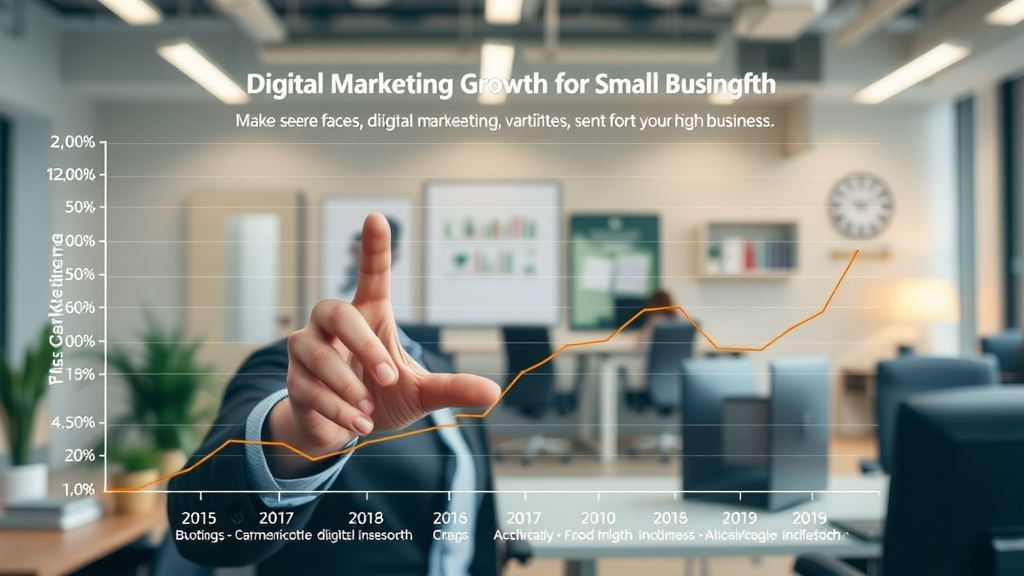
digital marketing for small businesses growth infographic upward trend

Empowering Your Online Presence with Digital Marketing for Small Businesses

Building a strong online presence is the cornerstone of digital marketing for small businesses. With a well-crafted digital strategy, even the smallest company can appear in search results right next to industry giants. Through deliberate use of content marketing, SEO, and social media, you can steadily attract more potential customers, build trust, and establish authority in your niche.

Digital marketing provides a platform to showcase your products or services, share your expertise, and communicate directly with your target audience—all while tracking performance in real time. The most successful small businesses treat their online presence not as a side project, but as a central part of their business pro toolkit for sustainable growth. By the end of this article, you will be equipped with the tools and knowledge you need to elevate your brand, engage your ideal customers, and unlock digital growth opportunities tailored to small business needs.

  • By the end of this article, you will understand:
  • The types of digital marketing and which boosts small business growth
  • How to choose the right social media platforms and marketing strategies
  • Tips for building an effective marketing strategy and measuring success

business pro working on digital marketing for small businesses strategy

Defining Digital Marketing for Small Businesses: Key Concepts and Benefits

Digital marketing refers to the strategic process of promoting products or services through online channels—like websites, social media platforms, search engines, and email campaigns. For small businesses, this means having access to tools and audiences that were once reserved for the largest players. One key benefit? Digital marketing levels the playing field for small businesses, allowing them to compete with industry leaders and efficiently reach their target audience .

With digital marketing, small businesses can directly connect with potential customers, personalize their offerings, and quickly adapt to market changes. The flexibility and affordability of techniques such as content marketing, SEO, and social media messaging make it realistic for any business—regardless of size—to achieve significant growth. Key performance indicators (KPIs), traffic analytics, and automated email lists let business pro owners fine-tune their marketing strategy for optimum results.

"Digital marketing levels the playing field—small businesses can now compete with industry leaders in ways never before possible."

The Building Blocks of Online Marketing for Small Businesses

Understanding Small Business Marketing Strategies

Developing effective marketing strategies is the foundation of online marketing for small businesses. Whether you are launching a new product, attracting local customers, or increasing brand recognition, the right strategy is essential for cutting through digital noise. Successful marketing efforts begin by identifying the target audience : what are their needs, where do they spend their time online, and which social media platform or media marketing tactic is most likely to reach them?

From there, it is about selecting the appropriate marketing tools—like social media platforms, content marketing techniques, and email marketing automation—that align with your business goals and available budget. Flexibility is key: small businesses often benefit from starting with a few high-impact channels and expanding as results show. Analyzing and refining these strategies means you’re never guessing; you can let the data reflect what works and adapt accordingly.

marketing strategies team reviewing data for small business online marketing

Core Elements of Digital Marketing

Every digital marketing strategy should include these fundamental building blocks:

  • Website design and user experience : A well-designed, intuitive website builds trust and encourages customers to take action.
  • Content marketing and storytelling : Sharing useful, relatable stories and information through blog posts, videos, or guides engages your audience and keeps them coming back.
  • Email marketing and building an email list : Email marketing delivers targeted messages straight to your customer's inbox, nurturing relationships and boosting repeat sales. An active, quality email list is a true marketing asset.
  • Social media marketing and choosing the right social media platforms : Engagement on platforms like Facebook, Instagram, or LinkedIn helps businesses amplify their voice, reach new audiences, and start real conversations.
  • Search engine optimization (SEO) and leveraging search engine visibility : Appearing at the top of search results intercepts highly interested customers. Both on-page and off-page SEO are critical for boosting organic traffic and building credibility.

How Can Small Businesses Use Digital Marketing?

Small businesses have countless opportunities when it comes to digital marketing. By combining social media marketing, content marketing, email marketing , and search engine optimization , businesses can drive awareness, increase website traffic, and foster customer loyalty. One practical method is to use targeted ads to display products or services to people most likely to buy, then retarget these visitors via email marketing campaigns, converting interest into sales.

Blog posts, social media updates, and short video content can promote your brand’s story and highlight new products. Tools like Google Analytics and social media insights allow you to track what content resonates and refine your future marketing efforts for even greater impact. A multi-channel approach helps ensure your small business stays top of mind wherever your potential customers are found online.

small business social media marketing on multiple platforms

Crafting an Effective Digital Marketing Strategy for Small Businesses

Step-by-Step Guide to Building Your Small Business Marketing Strategy

  1. Analyze your target audience and business objectives : Identify who you are trying to reach and what success looks like. This will shape every aspect of your strategy, from content style to the selection of media platforms.
  2. Choose suitable marketing channels and media platforms : Not every small business needs to be on every platform; pick those most likely to reach your ideal audience and focus your marketing efforts there for maximum effect.
  3. Set a realistic marketing budget : Decide how much to invest in paid advertising versus organic growth tactics like blogging and social media engagement.
  4. Determine your success metrics and KPIs : Define what will be measured—whether it's website visits, email list size, or sales conversions—so you can gauge the ROI of your marketing strategy.
  5. Implement and adapt your marketing efforts for growth : Launch your campaigns, collect data, and refine your tactics regularly. Digital success is about continuous improvement—observe trends, listen to customer feedback, and evolve your strategy.
"A successful marketing strategy is rarely set in stone—continuous adaptation is key to staying ahead in the digital world."

The 4 Types of Digital Marketing Every Small Business Needs

Every small business can benefit from these four essential digital marketing types:

  • 1. Content Marketing : Creating valuable blog posts, guides, and videos that attract, educate, and convert potential customers.
  • 2. Social Media Marketing : Engaging with audiences on selected social media platforms to build community, brand awareness, and advocacy.
  • 3. Email Marketing : Building an active email list to nurture leads, drive sales, and maintain ongoing conversations with customers.
  • 4. Search Engine Optimization (SEO) : Optimizing your website and content to appear high in search engine results with the keywords your target audience is using.

Watch: Short explainer—Digital marketing types for small businesses

types of digital marketing for small businesses elements infographic

Boosting Your Online Presence: Social Media Marketing for Small Businesses

How to Choose the Right Social Media Platform

When it comes to maximizing your reach, not all social media platforms are created equal. The right social media platform for your business depends on your industry, target audience, and content type. For example, visually-based businesses may thrive on Instagram, while B2B service providers often find more success with LinkedIn. Conducting research on where your customers spend their time ensures your content marketing efforts are focused where they’ll produce the greatest results.

Assess which platforms align with your business goals and resources. Consider how your competitors and industry leaders are engaging with customers on each media platform, and use this insight to inspire your own approach. Start with one or two platforms, master them, and expand as your audience grows and your team becomes more comfortable.

choosing the best social media platform for small business growth

Innovative Social Media Marketing Strategies

  • Storytelling and video content : Bring your brand’s story to life with authentic behind-the-scenes videos, tutorials, and customer testimonials.
  • Customer engagement through real-time responses : Promptly answer messages and comments to foster brand trust and long-term customer relationships.
  • Community building and influencer marketing collaborations : Team up with local influencers or micro-influencers to grow your reach and introduce your brand to new potential customers.

Experimenting with these strategies can quickly set your small business apart and drive engagement that leads to sales.

Harnessing Email Marketing: Building a High-Impact Email List for Small Businesses

Why Email Marketing Remains a Powerhouse

Despite the rise of social platforms, email marketing remains one of the most effective digital marketing tools for small businesses . According to recent studies, the average ROI of email marketing exceeds $42 for every $1 spent. Creating a targeted email list allows you to deliver exclusive offers, product updates, and personalized messages directly to your most engaged customers. Unlike social media algorithms, you control your contact list—ensuring your marketing messages are seen by the people who matter most.

Effective email marketing means segmenting your list, personalizing campaigns, and using automation to nurture leads throughout the buyer’s journey. Building and maintaining a quality email list should be an ongoing priority for every small business pro looking for sustainable digital growth.

email marketing for small businesses high impact campaigns

Mastering Search Engine Optimization for Small Businesses

Essential SEO Tactics for Outstanding Small Business Results

  • Local SEO for brick-and-mortar businesses : Claim your Google Business profile, gather positive reviews, and use local keywords to increase visibility in local search results and Google Maps.
  • On-page and off-page optimization : Optimize website structure, meta descriptions, and internal links while also earning backlinks from reputable sites to improve search engine trust and ranking.
  • Keyword research and content planning : Choose keywords that your target audience actually uses, and align your blog posts and landing pages to answer their needs.
  • Optimizing for mobile users : With over half of all web traffic coming from mobile devices, make sure your website loads quickly, looks great, and is easy to navigate on any screen.
SEO Tasks vs. Business Goals for Small Businesses
SEO Task Business Goal
Local keyword optimization Increase foot traffic to store/location
Building backlinks Boost website authority & trust
Mobile-friendly site Improve user experience and lead conversions
On-page SEO Increase organic search traffic

Watch: SEO basics for small business digital marketing

search engine optimization for small businesses seo analytics

Amplifying Content Marketing for Digital Growth

Creating Compelling Content on a Budget

Content marketing is one of the most adaptable and scalable marketing strategies available to small businesses. Even with a limited marketing budget, you can produce high-impact content—like how-to blog posts, customer stories, or educational videos—that attracts, informs, and converts your target audience . Use free or affordable tools to design graphics, shoot smartphone videos, or manage a blog, ensuring your marketing effort stays cost-effective while maximizing reach.

Repurposing content—such as turning a successful blog post into a social media series or short video—stretches your resources further and ensures a consistent message across platforms. The key is to stay authentic, provide real value, and adjust topics based on customer questions or search trends to maintain engagement and reinforce your small business’s online authority.

content marketing for small businesses on a budget

Influencer Marketing Strategies for Small Businesses

Influencer marketing isn’t just for global brands. For small businesses, partnering with local influencers or niche micro-influencers can have a huge impact on visibility and credibility. These collaborations put your products or services in front of highly relevant audiences through trusted voices, often in authentic, relatable ways. Consider offering product samples, exclusive discounts, or co-hosting special events to attract mutually beneficial partnerships that boost both reach and sales.

By aligning yourself with influencers who share your brand values and genuinely connect with your target audience, you can amplify your marketing reach, encourage word-of-mouth referrals, and drive measurable growth—without breaking the bank. The right influencer marketing approach can help you swiftly penetrate new markets and find communities eager for what your business offers.

influencer marketing strategies for small businesses collaborate handshake

What Are the 5 S's of Digital Marketing?

The “5 S’s” provide a practical framework for digital marketing for small businesses:

  • Sell – Grow online sales and revenue
  • Serve – Improve customer service and satisfaction
  • Sizzle – Enhance your brand experience and differentiation
  • Speak – Communicate and engage with your audience
  • Save – Use digital tools to save time and resources

Focusing on these goals helps shape your small business digital marketing strategy towards long-term growth and resilience.

What Are the 7 P's of Digital Marketing for Small Businesses?

The “7 P’s” extend traditional marketing principles into the digital world. They include:

  • Product – What you offer to your customers
  • Price – How much customers pay
  • Place – Where your products or services are available (online/offline)
  • Promotion – How you communicate offers and value proposition
  • People – Everyone involved in delivering the product or service
  • Process – The systems and procedures behind sales and service
  • Physical evidence – Tangible cues or proof that instill customer confidence

Understanding and optimizing these seven aspects provides small businesses with a comprehensive roadmap for developing a competitive digital marketing strategy that delivers real results.

Watch: 7 P's of digital marketing explained for small businesses

Maximizing Results: Tracking and Improving Marketing Efforts

Measuring ROI from Your Digital Marketing for Small Businesses

  • Tools for tracking digital campaigns : Leverage tools like Google Analytics, Facebook Insights, and email automation dashboards to monitor your key metrics and make informed decisions about your marketing budget.
  • How to analyze conversions, sales, and online engagement : Break down the data for every campaign, focusing on what drives conversions—whether it’s website visits, sign-ups to your email list, or direct sales from a social media post.
  • Adjusting your marketing strategy for continuous improvement : Regularly review campaign performance to identify successful tactics and areas for refinement. Continuously adapt your marketing efforts to meet changing customer expectations and unlock further digital growth.

maximizing digital marketing for small businesses tracking analytics

FAQs: Digital Marketing for Small Businesses

  • How long does it take to see results from digital marketing? It depends on your approach, but most small businesses see measurable improvements in online presence, traffic, and engagement within 3 to 6 months. Consistency and optimization are key for sustained results.
  • What is the average marketing budget for small businesses? Small businesses typically allocate 7-10% of revenue to marketing. However, creative content marketing and organic social media can yield results with a smaller budget if used strategically.
  • How to choose the right marketing channels? Focus on where your target audience spends their time. Evaluate each media platform’s potential, experiment, and invest more heavily in the channels that demonstrate strong engagement and conversions.
  • How can I keep up with digital marketing trends? Subscribe to digital marketing blogs, attend webinars, or join professional groups on LinkedIn. Continually investing time in learning ensures you stay ahead in a changing landscape.
  • Do all small businesses need a website? Yes. A website acts as your digital storefront, enabling you to reach potential customers 24/7, provide credibility, and serve as a hub for all your marketing efforts.

Key Takeaways for Digital Marketing Success in Small Businesses

  • Digital marketing offers transformative opportunities for small businesses.
  • Combining social media marketing, SEO, content marketing, and email marketing delivers powerful results.
  • Measure, optimize, and adapt your marketing efforts constantly.
  • Even with limited budgets, small businesses can achieve outsized digital marketing growth.

Next Steps: Accelerate Your Small Business Growth through Digital Marketing

Ready to put these strategies into action? Start by assessing your online presence, prioritizing core digital marketing channels, and building a step-by-step plan. With continuous optimization and learning, your small business can achieve and sustain remarkable digital growth. Don’t wait—take your first step today!


Content Marketing

19 Views

0 Comments

Write A Comment

*
*
Please complete the captcha to submit your comment.
Related Posts All Posts
01.08.2026

Content Marketing Strategy Essentials: Building Content Authority for Small Businesses

In the ever-evolving digital landscape, content marketing strategy is no longer just about flooding your website with blog posts or relying on AI to generate articles faster than your competitors. For small businesses looking to grow—and not just survive—standing out in a world awash with generic, homogenized content requires something more: content authority. Today, we turn to Dan Manherz, founder of Strategy AdvantEdge, a leader renowned for empowering small business owners with actionable, high-impact content strategies. Throughout this article, Dan unpacks the essentials of building content authority, demystifies the realities of AI-powered SEO, and delivers powerful insights that will redefine how you think about winning attention and trust in the digital age. Dan Manherz’s Core Thesis: Build Content Authority to Outperform AI-Driven Competitors According to Dan Manherz, the biggest stumbling block for small businesses today is an over-reliance on AI-generated content as the supposed ticket to better rankings. Too many fall for the myth that more content deployed by artificial intelligence means higher visibility, when in fact, this can backfire—dulling your brand’s unique voice and credibility. Dan’s experience at Strategy AdvantEdge has shown there is a critical distinction between using AI as a research accelerator versus letting it define your entire voice. Without real human expertise guiding the message, businesses risk fading into a digital background noise indistinguishable from their competition. Building content authority isn’t about chasing quantity; it’s about leveraging your unique perspectives and proven experience to become a recognized authority in your niche—something algorithms can’t fake and audiences crave. “People believe that if they just use AI to create the content, then Google will rank them higher. And that is a fallacy.” As Dan Manherz, of Strategy AdvantEdge, explains “Because the landscape is changing, and AI is taking control of most of the searches. And all of your content looks the same, you won't stand out to AI.” As Dan Manherz, of Strategy AdvantEdge, further cautions Why Content Authority Matters More Than Ever for Small Businesses The digital marketing arena now moves at an unprecedented pace, and for small businesses, there’s a distinct threat—and opportunity. Dan Manherz emphasizes that rapid advancements in AI mean the web is quickly filling up with homogeneous content, all chasing the same keywords, answering the same questions, and lacking a relatable human touch. If your brand's voice is lost in that sea of sameness, not only are you invisible to real prospects, but you’re also increasingly unrecognizable to sophisticated AI-driven search algorithms hungry for authentic, expert-driven material. This is precisely why content authority—demonstrating both deep expertise and a human perspective—matters so much. When your content stands apart because it blends research-backed substance with personal insight and practical stories, your business earns trust not just from your ideal audience, but from Google itself. As Dan continually sees at Strategy AdvantEdge, when clients shift their focus from “more content” to “more authoritative content,” their organic visibility rises and their competitive edge sharpens—even against much larger brands. For small business owners seeking a step-by-step approach to implementing these principles, exploring a comprehensive guide to building an effective content marketing strategy tailored for small businesses can provide actionable frameworks and practical examples to accelerate your results. Combining AI Research with Human Expertise: A Winning Content Marketing Strategy Today’s savviest small businesses leverage the speed and breadth of AI to uncover trends, gather data, and identify content gaps—then filter this information through real-world expertise to deliver attractive content for Google and, most importantly, for humans. As Dan Manherz advocates, the game-changer is in the fusion: use AI for what it does best—collecting research—while letting your lived experience inform the unique angle, opinion, or solution your audience can’t get anywhere else. Through Strategy AdvantEdge, Dan has enabled countless clients to thrive with this hybrid approach. Instead of producing more of what’s already out there, you’ll create smarter, higher-impact articles, videos, and guides that genuinely help and engage. Brands taking this approach not only grow their content marketing strategy’s effectiveness but also become recognized thought leaders in their field—earning backlinks, shares, and sustained organic traffic as a direct result. “By combining the research done by AI along with the expert, you can come up with some very attractive content for Google.” As Dan Manherz, of Strategy AdvantEdge, advises Aligning with Google's E‑E‑A‑T Framework: Experience, Expertise, Authoritativeness, Trustworthiness Every small business leader should know that Google's ranking system is engineered toward rewarding robust E-E-A-T: Experience, Expertise, Authoritativeness, and Trustworthiness. Dan Manherz elucidates that this framework is far more than a buzzword—it’s a blueprint for outshining your AI-reliant competition. He notes, “Google wants to combine the expert expertise with the content.” By showing your genuine experience—through real stories, concrete examples, and transparent expertise—you’re sending powerful signals that your site is not just another AI clone. This is the competitive advantage that strengthens your content marketing strategy: people (and algorithms) trust you because you have demonstrated, not just claimed, your expertise. Efficient Content Marketing Strategy: Quality Over Quantity for Sustainable Growth One of the most compelling insights from Dan’s years at Strategy AdvantEdge is the misconception that dominating digital marketing requires a relentless, overwhelming publishing schedule. In reality, he argues, efficient, well-targeted content backed by true expertise consistently outperforms mountains of superficial material. Your time—and your audience’s—is precious. If every piece of content you publish demonstrates genuine authority, utility, and a distinct voice, you will drive more sustainable long-term growth. Dan cites success stories where clients have reduced their content output but dramatically increased engagement, rankings, and conversions by putting strategy and expert input first. His practical approach—quality over quantity—enables small business teams to focus resources on content that builds trust and drives action, rather than just “feeding the machine.” “It doesn't take a lot of time if you do it properly.” As Dan Manherz, of Strategy AdvantEdge, reminds us Avoiding Content Saturation: How to Differentiate Your Brand in a Crowded Market For small businesses, the crowded digital space is both a challenge and an opportunity. Dan Manherz emphasizes that differentiation isn’t about shouting louder, but about being smarter and more deliberate. To avoid content saturation and truly establish your brand, focus on creating truly unique, expert-driven resources that deliver actionable value. This means shaping your content marketing strategy around specific audience needs, leveraging the depth of your team’s knowledge, and never shying away from showcasing what makes your story or solution different. Those who resist the “copycat” temptation by using AI as a starting tool—not the final word—reap greater brand loyalty and long-term SEO wins. Leverage expert perspectives to create unique content Use AI as a research tool, not a content generator Focus on building trust and authority rather than volume Optimize content structure for both search engines and human readers Key Takeaways for Small Business Marketing Directors and Entrepreneurs Understand that AI-generated content alone won’t drive ranking improvements Integrate your unique expertise to stand out from AI-homogenized content Allocate resources efficiently by focusing on authoritative content creation Align content with Google’s E-E-A-T to build sustainable SEO value Conclusion: Master Content Marketing Strategy with Authority and Efficiency Winning today’s digital attention war doesn’t require more noise; it demands more authority. According to Dan Manherz, building a distinctive content marketing strategy—one that blends AI-powered research with the irreplaceable value of your expert insights—is the ultimate growth hack for small businesses. When your content delivers genuine expertise with clarity, trustworthiness, and efficiency, you become a beacon for both algorithms and audiences amidst the generic fog. As Dan puts it, those who “do it properly” don’t have to work harder; they simply work smarter. The next chapter in your brand’s digital journey should be defined by thoughtful authority, authentic trust, and disciplined strategy—qualities that Google, your customers, and your long-term prospects will always reward. Prioritize expert input blended with AI-enhanced research Build content authority to differentiate in AI-dominated search results Focus on quality and trustworthiness to satisfy Google’s ranking criteria Next Steps: Get Expert Guidance for Your Content Marketing Strategy Ready to take your content marketing strategy to the next level and finally stand out in today’s AI-driven, expertise-hungry digital market? Book a free consultation with Dan Manherz and the team at Strategy AdvantEdge—and start building the content authority that will transform your small business growth If you’re eager to expand your marketing toolkit even further, consider exploring a broader range of small business marketing strategies that actually work. This resource dives into proven tactics beyond content, offering fresh perspectives and actionable ideas to help you unlock new growth opportunities. By integrating these advanced strategies with your content authority efforts, you’ll be well-positioned to outpace competitors and build a resilient, future-ready brand. Take the next step and discover how a holistic approach can elevate every aspect of your marketing.

10.21.2025

Building an Effective Content Marketing Strategy Tailored for Small Businesses

When it comes to content marketing strategy for small businesses, most owners and marketers are finding themselves navigating a vastly different digital landscape than just a few years ago. Attention spans are shorter, competition fiercer, and—most importantly—how people search for solutions has fundamentally shifted. In an era dominated by mobile devices and voice search, simply “having information on a website” is no longer enough. Dan Manherz of Strategy AdvantEdge emerges as your authoritative guide to this new world, bringing decades of experience and firsthand insights to help you transform your content into your most powerful, always-on sales asset. Why Small Business Owners Must Rethink Their Content Marketing Strategy Today "One of the biggest misconceptions is believing that just having information on your website is enough. But with mobile and voice searches, people are looking very differently now. You're missing out if you're not optimizing for that." – Dan Manherz, Strategy AdvantEdge According to Dan Manherz, the single most dangerous misconception for today’s small businesses is the belief that content, once uploaded, automatically attracts the right audience. This outdated view ignores how radically mobile search and voice-activated queries have changed discovery. More and more, users are articulating long, conversational searches on their smartphones—sometimes even using voice commands—which means your carefully constructed “About” page or service listing may never appear in the results. As Dan insists, overlooking these evolutions is akin to locking your business’s front door during operating hours: “You’re missing out if you’re not optimizing for that.” This transformation in consumer behavior is not a slow, future trend—it’s happening now. Search engines like Google have gotten smarter, favoring contextually-rich, targeted answers over generic keyword bids. Small business owners who fail to adapt risk invisibility—not just to casual browsers, but to motivated buyers ready to act. “If you’re not keeping up with how people actually search,” Dan explains, “your best offerings could be hidden in plain sight.” For anyone focused on growth, the call to action is urgent: rethink your content marketing strategy to align with the way customers live and search today. The Shift to Mobile and Voice Search: What It Means for Your Strategy The transition to mobile-centric and voice-activated search isn’t just about technology—it’s about meeting people where they are, literally and figuratively. As Dan Manherz outlines, smartphones and smart speakers have empowered users to perform increasingly nuanced searches: “People are searching differently than they used to. They now use their mobile phones to record a search.” This means your content must anticipate and elegantly answer queries that rarely existed before. Gone are the days when a simple, broad keyword could get you noticed; now, it’s about relevance in the most specific moments of need—a shift small business owners cannot afford to ignore. For example, a shopper seeking urgent plumbing help might say, “Who can fix a leak under my kitchen sink near me?” rather than typing “plumber near me.” According to Manherz, this shift demands a content strategy that’s not just visible, but findable in the multitude of ways people express problems and seek answers. Searches are longer, questions are more context-rich, and intent is increasingly clear with every word or phrase. Optimizing for mobile and voice search is now foundational—not optional—for anyone serious about growth in today’s competitive environment. How Multi-Word Searches Impact Content Discovery Multi-word, or “long-tail,” searches are rising dramatically in frequency and importance. Dan Manherz points out that small businesses commonly lose out on high-intent customers because their content is too generic. With consumers now searching in full questions or problem descriptions—especially through mobile voice search—they expect tailored, immediate answers. If your website only contains broad, catch-all pages, Google’s algorithms may simply never surface your business as a solution to specific, modern-day queries. Imagine a potential customer struggling to articulate their need for repairs or services. They might not use your brand’s “official” industry language—they’ll use the words that come to mind in the moment of stress or demand. According to Manherz, businesses that carefully research, anticipate, and build content for these exact phrases position themselves as direct responders when it matters most. Optimized, multi-word search-friendly content bridges the crucial gap between what your customers are really asking and what your business can uniquely provide. Proven Impact: How a Well-Crafted Content Marketing Strategy Drives Results "For example, instead of searching 'plumbers in London,' users now ask, 'Can you find someone near me to fix a leak under the kitchen sink?' That specificity demands targeted, nuanced content." – Dan Manherz, Strategy AdvantEdge According to Dan Manherz, this shift toward highly specific, problem-oriented search queries means that businesses must move beyond vague keyword targeting. It is no longer enough to compete for the most desirable one-word or two-word search terms. Instead, content must be planned strategically—to mirror the customer’s intent, context, and the precise pain points they are hoping to alleviate. The results, according to Dan, can be dramatic: “That specificity demands targeted, nuanced content.” When you meet customers at their most critical decision points, conversion rates soar, and the ROI on your content marketing skyrockets. The effectiveness of this approach is further evidenced by countless case studies. Manherz details, “Whereas someone used to search ‘plumbers in London,’ they might now say, ‘Can you find someone very near to me who knows how to fix a leak underneath the kitchen sink?’” The difference isn’t trivial—in fact, it unlocks a vast new audience of high-intent buyers that generic, untargeted sites will never reach. Companies executing on this level of specificity see not just more traffic, but the right kind of traffic: qualified, interested, and ready to commit. From General Keywords to Niche Search Queries: Adapting Your Content Create content addressing specific customer questions and needs Optimize for voice search and long-tail keywords Use location and problem-specific phrases to capture intent Adapting your content marketing strategy to modern discovery behaviors starts with a shift from big, broad keywords to tight, intent-driven phrases. Dan Manherz emphasizes that every article, landing page, or blog post should directly answer the “how” and “why” behind a customer’s search—not just repeat industry clichés or overused catchphrases. According to Manherz, content must address real-time customer questions and situational problems, utilizing precise location- and need-specific language that mirrors users’ intent—especially in competitive, results-oriented niches. Optimization for long-tail keywords, particularly those shaped by voice and mobile queries, grants small businesses a sustainable edge. It is not simply about tricks or hacks, but a mindset shift toward customer-first publishing. “Use location and problem-specific phrases to capture intent,” Manherz advises, championing the importance of hyper-relevant storytelling and resourceful, utility-driven content. This approach not only improves your rankings—it builds trust and authority with your very best potential clients. Key Takeaway: Your Content as a Tireless Digital Salesperson "Every piece of content online is like having a digital salesperson working 24/7 for you, driving brand presence and customer engagement continuously." – Dan Manherz, Strategy AdvantEdge Perhaps the most powerful insight from Dan Manherz is his framing of web content as an untiring, ever-attentive “digital salesperson.” In his words, “Every piece of content that they have on the Internet is like having a digital salesperson that works 24 hours a day, 7 days a week for them.” This analogy isn’t just clever—it’s a foundational mindset shift for every small business owner wrestling with how to measure the true impact of their marketing investments. Effective content doesn’t rest; it nurtures, educates, qualifies, and persuades customers long after it’s been published. As Manherz points out, the compounding effect of well-placed blogs, FAQs, localized landing pages, and resourceful guides is immense—building a continuously expanding web of engagement that drives tangible returns even as you sleep. Maximizing ROI Through Consistent, High-Value Content The compounding value of high-quality, targeted content can be profound. As Dan Manherz observes, “Your content can continuously drive brand presence and customer engagement.” Every guide, blog post, or FAQ page you publish serves as an investment that pays ongoing dividends. Over time, these assets work synergistically—attracting and converting prospects at every stage of the buyer’s journey, tailoring the experience to match the customer’s unique needs, and building deep trust in your expertise. Maximizing ROI is about more than quantity; it’s about consistently delivering meaningful, helpful, and actionable information. Manherz emphasizes the need for meticulous measurement and ongoing adaptation: monitor analytics, listen to evolving search patterns, and refresh your messaging accordingly. This strategy ensures every piece of content remains a potent, 24/7 contributor to your business growth. Avoiding Common Pitfalls: Optimizing for How Customers Actually Search Research the evolving search behaviors including mobile and voice trends Develop content that answers precise, multi-word search queries Continuously update and measure content performance to adapt strategy Too many businesses fall into the trap of “set it and forget it” content—relying on intuition over research, and static, one-off pages instead of iterative, responsive publishing. According to Manherz, staying ahead means vigilant tracking of how customers actually search, using modern analytics tools to pinpoint shifts in intent as they happen. Proactive research into search trends—especially in mobile and voice—ensures your business isn’t left behind as language and technology evolve. Even the most brilliant page can become obsolete if it stops speaking the language of the customer. Consistently measuring content performance, updating for new queries, and expanding coverage for unforeseen problems are all non-negotiables in today’s climate. As Manherz summarizes, the best strategies never stagnate—they adapt, evolve, and expand alongside the audience’s needs and the ever-changing digital landscape. Summary: Elevate Your Small Business with a Smart Content Marketing Strategy Why embracing targeted, search-friendly content is your competitive edge It’s never been clearer: in the digital age, a content marketing strategy built on targeted, search-friendly content is the single most decisive competitive advantage for small businesses. Dan Manherz urges owners and marketing leaders not just to participate, but to become active shapers of their online narrative, meeting customers with exactly the right information at the right time. Those who position their content as a direct answer to evolving, multi-word, intent-rich queries will win the loyalty—and business—of a new generation of digital-first customers. Your brand’s digital footprint is no longer simply a brochure; it’s a living, responsive asset—a 24/7 salesperson that never takes a break. The businesses thriving today are those who recognize their audience’s search sophistication and respond with content that is every bit as astute, timely, and trustworthy. Next Steps to Making Your Content a 24/7 Digital Sales Asset Adopting this modern mindset means treating every piece of content as an extension of your sales and service team. Begin by researching the exact ways your ideal customers search—especially on mobile devices or via voice commands. Build and refine articles, FAQ pages, and resource content that directly answer those nuanced, time-sensitive questions. Monitor your performance, stay receptive to change, and invest in continuous improvement. Let your content marketing strategy be your tireless ambassador, your trusted digital guide—positioning your brand at the top of every relevant search and in the minds of customers when they need you most. Start elevating your content marketing strategy today—contact Dan Manherz and the Strategy AdvantEdge team for a tailored consultation, and unlock the growth potential your small business deserves!

07.29.2025

B2B Content Marketing London Ontario: Strategies to Close Deals

Did you know that companies using B2B content marketing generate up to 70% more qualified leads in London Ontario than those who don’t? In today’s highly competitive market, digital marketing is the difference between sales teams chasing cold prospects and deals closing themselves. B2B content marketing London Ontario isn’t just about appearing in search engine results—it's about engaging the right decision-makers with the right message at the right time. In this guide, unlock the playbook top marketing agencies use to fill pipelines, shorten sales cycles, and consistently outperform competitors. Unlocking B2B Success: Why Content Marketing Drives Up to 70% More Qualified Leads in London Ontario The landscape for B2B content marketing London Ontario is rapidly evolving as businesses realize that traditional outbound tactics no longer guarantee robust pipelines or quality leads. Instead, content marketing leverages search engine optimization, digital PR, and intelligent content creation to put your message directly in front of those searching for your solution. By focusing on value-driven, educational, and timely content, companies are attracting decision-makers who are already primed to convert. Consider the impact of a dynamic team crafting content specifically for your target audience: every blog post, white paper, or case study is a hardworking salesperson in your funnel. This shift allows London Ontario companies to move away from cold calls and expensive ad campaigns, and instead, nurture leads organically until they’re ready to buy. With the support of expert marketing agencies and marketing specialists skilled in B2B strategies, organizations are seeing their sales cycles shrink and their cost per lead drop. This strategy doesn’t just drive more leads—it attracts qualified leads who fit your ideal customer profile. A well-designed content strategy is not only crucial for initial lead generation but also for enhancing the customer journey . London Ontario’s highly competitive market demands tailored content for every stage of the funnel, helping your brand stand out where it matters most—when decision-makers are seeking solutions. For B2B brands striving to dominate their niche, content marketing is the ultimate engine for long-term business growth. Disrupting the B2B Landscape: Essential Insights for Marketing Agency and B2B Brands The traditional B2B model in London Ontario—where outbound cold calling was king—has been disrupted by marketing agencies who focus on content-first initiatives. Today, content marketing agencies are redefining sales enablement for B2B brands, harnessing the power of digital marketing that emphasizes online content, storytelling, and social proof. These agencies know that layered, consistent content attracts not just any audience, but the target audience that moves the revenue needle. Marketing agency success now lies in their agility—rapidly iterating strategies based on data insights, industry research, and real-time feedback. For ambitious businesses in a city as bustling as London Ontario, adopting these new models is more than a trend, it’s a necessity. Agencies with a deep understanding of marketing services , including SEO, social media, and video production, help B2B brands transform passive web visitors into passionate advocates and repeat buyers. Incorporating the expertise of a marketing specialist is the secret ingredient. These pros bring a nuanced understanding of the London Ontario customer journey —from brand discovery through deal closure. Armed with insights from content strategy, competitive market research, and the latest digital marketing techniques, they empower B2B companies to consistently outperform their competitors. What You'll Learn for B2B Content Marketing London Ontario Understand the value of content marketing in B2B sectors. Identify leading marketing agencies and specialists in London Ontario. Explore actionable strategies to rapidly close B2B deals. Learn to design and implement successful B2B content strategies. Discover how organic traffic and social media contribute to B2B sales funnels. Defining B2B Content Marketing London Ontario: Optimized Strategies for Local Businesses What does expert B2B content marketing London Ontario actually look like? At its core, it’s about crafting targeted, high-value content that resonates with specific business audiences within the city and surrounding region. Local businesses must go beyond generic blogs and adopt content that addresses vertical-specific pain points, industry challenges, and purchase motivations unique to the London Ontario market. Optimized strategies begin with location-aware research—what are London businesses searching for? What questions are most relevant to your audience? By weaving in regional context and competitive insights, B2B brands can ensure their content ranks well on search engines and also delivers genuine value. Additionally, effective content marketing requires a blend of SEO services , structured content planning, and ongoing analysis to deliver measurable results. A successful approach requires collaborating with a marketing agency or marketing specialist who understands both global best practices and local market dynamics. They possess the know-how to leverage the full suite of marketing services —from digital PR to content creation—optimizing every asset for maximum business impact right here in London Ontario. What is Content Marketing and Why It Matters for B2B Brands in London Ontario? Content marketing is the deliberate process of creating, publishing, and distributing quality content across multiple channels to nurture relationships with decision-makers and convert them into customers. In the context of London Ontario, it’s critical since B2B buyers crave educational materials that help them navigate their purchase journey in an often highly competitive market . Rather than relying solely on advertisements or cold outreach, B2B brands now attract new clients by providing deep industry insights, actionable guides, and case studies that highlight real business outcomes. These content touchpoints—delivered via blog posts, video production, webinars, and whitepapers—support the customer journey from awareness through to decision. A robust content marketing strategy also propels search engine optimization , increasing organic visibility and reducing the need for paid ads. In a growing business hub like London Ontario, where new competitors emerge constantly, a content-led approach can secure long-term ranking, thought leadership, and steady streams of warm leads. London Ontario Content Marketing Agency Solutions: Partnering for Success Finding the right marketing agency or content marketing specialist can greatly accelerate your growth. The best agencies don’t just execute campaigns; they become your strategic partner, advocating for your objectives and constantly optimizing based on data and results. When evaluating content marketing agencies , consider experience in your vertical, their B2B track record, and how they blend local expertise with advanced digital tactics. Should you go with a dedicated content marketing agency or a full-stack digital marketing agency? While the former may offer deep niche experience, full-stack firms provide integrated solutions—combining SEO, social media, video, digital PR, and more for holistic B2B growth. Both models can be effective; the key is aligning with an agency or specialist who values ongoing measurement and transparent communication. Evaluating marketing agencies and their offerings Choosing between content marketing agencies vs. full-stack marketing services How a marketing specialist can refine your B2B content marketing strategy No matter which direction you choose, a skilled marketing specialist will help shape your content strategy, map assets to the full sales funnel, and build account-based content that directly targets high-value prospects across London Ontario. Crafting a Powerful B2B Content Strategy: Foundations for Success Building a successful B2B content strategy in London Ontario means more than just publishing blog posts—it requires clear objectives, deep understanding of your audience, and a collaborative approach. Stakeholders from sales, operations, and customer service must inform content decisions, ensuring topics address real-world pain points and competitive market trends within the London area. Begin by clarifying your target audience and defining content pillars—core themes that reflect both search demand and your unique offerings. Use competitive analysis to shape messaging and ensure your assets stand out in a crowded field. The best strategies continuously refine topics based on feedback, performance data, and search engine insights. Remember, effective B2B content is never “one-size-fits-all.” It adapts to the customer journey, delivering informative blog posts, in-depth whitepapers, engaging video production, and timely social media updates that support decision-makers at every stage. Key Elements of Effective B2B Content Strategy in London Ontario Understanding your target audience and verticals Competitive analysis and London market nuances Content themes that drive leads and conversions Start by pinpointing your ideal customer profiles—including their job titles, pain points, and industry challenges. Conduct a detailed competitive analysis to reveal gaps in your content marketing efforts and opportunities for differentiation. Lastly, develop content themes mapped to every step of the sales funnel: thought leadership for awareness, solution comparisons for consideration, and success stories for the decision phase. Stay agile—adjust your content mix regularly based on performance results, feedback from your sales team, and shifting search engine algorithms. This flexibility ensures your content strategy feeds site traffic, supports lead generation, and maximizes conversions in a dynamic market like London Ontario. Table: Comparing Top Content Marketing Agencies in London Ontario Agency Name Services Offered Industry Focus Notable Clients Local Expertise Insightful Digital SEO, Content Creation, Social Media, Video Production Technology, Manufacturing ABC Tech, Nexus Solutions ✔ London B2B Solutions Content Strategy, Lead Generation, Digital PR Healthcare, SaaS Pulse Health, DataTrust ✔ AgencyEdge Full-Stack Marketing Services Finance, Professional Services Secure Fin, LegalStart ✔ Maximizing Organic Traffic with B2B Content Marketing London Ontario One of the greatest benefits of expertly implemented b2b content marketing London Ontario strategies is a consistent increase in organic traffic . Unlike paid advertising, organic traffic remains a long-term asset, drawing in those actively researching solutions in your space. When resources focus on search engine optimization and high-intent content, your site will continually attract more decision makers ready to engage. Top marketing agencies leverage advanced keyword research to discover what your prospects are searching for, aligning online content to answer those needs. This approach does more than just draw eyes to your website—it cultivates trust, positions your firm as an expert, and moves leads deeper into your sales process. Additionally, by optimizing site structure and internal linking, agencies help visitors navigate content seamlessly, improving conversion rates at every step. Modern SEO services go hand-in-hand with content creation. Dynamic blog series, downloadable assets, and SEO-rich videos help maintain visibility in a saturated market, giving your B2B company a sustained edge over competitors—with each new piece of quality content compounding your results over time. Strategies to Grow Organic Traffic and Attract Decision Makers Leveraging SEO to drive organic leads Targeting high-intent B2B keywords Optimizing site structure for buyer journeys A powerful first step is to identify and target the high-intent keywords used by your ideal decision-makers. Integrate these terms naturally within content, metadata, and visuals to maximize search engine reach. Next, utilize content clusters and pillar pages—long-form resources that establish topical authority and link together your supporting articles. Finally, make navigation intuitive. Map your site’s content to the distinct stages of your customer journey , ensuring decision-makers can easily move from thought leadership, to product/solution pages, to conversion points. The resulting site experience increases time on site, boosts conversions, and helps reinforce your brand authority in the London Ontario market. Integrating Social Media into Your B2B Content Marketing London Ontario In B2B spaces, social media is often underestimated. But in London Ontario, platforms like LinkedIn, Twitter (X), and even emerging industry-specific networks are powerful amplifiers for content marketing campaigns. They increase reach, facilitate lead generation , and make it easy for prospects to learn about your company through peer-to-peer recommendations and community engagement. The most successful B2B brands design content formats to match the preferred platforms of their target audience. For instance, thought-provoking LinkedIn articles, informative infographics, or behind-the-scenes videos on Twitter engage busy decision-makers without demanding too much time. By building authentic relationships through social channels, brands in London Ontario cement lasting trust with key influencers and buyers. Partnering with a digital marketing agency skilled in social media ensures your posts not only look professional, but also tie back to major strategic goals: increased awareness, brand engagement, and a pipeline of qualified leads funneled back to your website for conversion. Social Media Tactics for B2B Content Amplification Best platforms for B2B networking in London Ontario Content formats that succeed (video, infographics, articles) Nurturing B2B relationships through social channels Identify where your London Ontario decision-makers are most active online. For most B2B companies, LinkedIn offers the greatest organic visibility, but don’t overlook Twitter, local forums, or niche groups. Format content to maximize engagement—from short-form video production to expert Q&A sessions, each asset should provide clear value and actionable insights. Strategically boost high-performing posts to expand your reach, then directly engage with commenters and share user-generated content from satisfied customers. Over time, this approach builds a thriving community and increases the impact of every piece of content you publish, driving more sales-ready leads into your pipeline. Measuring Success: KPIs for B2B Content Marketing London Ontario To ensure your investment in B2B content marketing London Ontario delivers real bottom-line results, it’s essential to define and track the right Key Performance Indicators (KPIs). Strategic marketing agencies go beyond vanity metrics like pageviews, focusing on sales pipeline velocity, conversion rates , and the actual value attributed to each channel. Precision is key—top agencies and specialists set measurable goals from the outset and continually refine tactics based on data. By leveraging attribution models, you can connect marketing efforts directly to revenue outcomes, making it easy to report ROI on content assets, organic traffic, and social media campaigns. Advanced tracking ensures that every touchpoint—from first site visit to final deal closure—contributes to a virtuous cycle of learning and optimization. Partnering with a marketing specialist gives London Ontario companies the advantage of ongoing campaign optimization and transparent reporting, guaranteeing that each content asset supports both short- and long-term growth targets. Monitor and Optimize with the Right Marketing Specialist Tracking conversion rates and sales pipeline velocity Attribution models for B2B content marketing ROI Adjusting strategies based on performance data A proactive marketing specialist will routinely examine your analytics dashboard, looking beyond surface-level metrics to find the levers that drive the most deals. They use attribution modeling to connect content touchpoints (organic, social, video, digital PR) to actual sales outcomes, enabling smarter decision-making. If a blog series sparks lead generation but fizzles near the decision-making stage, the strategy shifts. If video content resonates with C-Suite buyers, more resources are allocated to production and promotion. This relentless focus on results—the hallmark of leading London Ontario agencies—ensures your content marketing efforts maintain momentum and consistently deliver ROI. Case Studies: B2B Companies Closing Deals with Content Marketing in London Ontario The business landscape in London Ontario is filled with success stories of B2B brands leveraging content marketing to outpace competitors, reduce sales cycles, and maximize ROI. Local content marketing agencies have helped technology firms, healthcare providers, and manufacturing companies translate targeted campaigns into measurable business outcomes. For example, one tech firm increased qualified leads by 150% in under six months by deploying a mix of SEO-rich blogs, data-driven case studies, and gated downloadables. Another local manufacturing supplier reduced their average sales cycle by 40% with nurture-driven content and focused LinkedIn campaigns aimed at decision makers. Increase in qualified leads Shortening sales cycles with targeted content ROI examples and testimonials These results are not outliers—they are the new standard for companies that commit to robust, flexible, audience-focused content strategies designed and executed in partnership with seasoned London Ontario marketing agencies. Quote from a Leading London Ontario Marketing Specialist "Effective B2B content marketing isn't just about visibility—it’s about driving better engagement with the right decision makers at the right time." Practical Checklist: Launching Your B2B Content Marketing London Ontario Campaign Set measurable goals tied to sales outcomes Audit current content and competitive landscape Build a calendar combining long-form, social, and video assets Partner with a marketing agency or specialist for execution Monitor, measure, and scale successful strategies Watch Real Examples of B2B Content Strategies in Action For those looking to see B2B content marketing in practice, watch this exclusive behind-the-scenes video from a top London Ontario marketing agency. You’ll learn firsthand how local experts plan, produce, and promote high-impact campaigns that accelerate revenue and set businesses apart in a competitive market. Visual Walkthrough: Building High-Impact Campaigns Sometimes, seeing is believing. This step-by-step video walkthrough showcases how to build and execute a high-performing B2B content campaign in London Ontario—from initial market research to post-campaign analytics. Perfect for business leaders and marketing teams alike. FAQ: B2B Content Marketing London Ontario What makes content marketing effective for B2B in London Ontario? Content marketing works for B2B companies in London Ontario by building trust, educating decision-makers, and nurturing relationships throughout the sales funnel. By providing helpful, relevant content tailored to the unique local market, companies drive more qualified leads, shorten sales cycles, and enhance brand authority. This results in better engagement and higher close rates compared to traditional marketing efforts. How do I choose the right marketing agency for my B2B content needs? When selecting a marketing agency, look for industry expertise, proven B2B results, and a collaborative approach. Top agencies in London Ontario should offer comprehensive services—from SEO and content creation to analytics and social media—and be transparent about their processes and outcomes. Ask for references, review their case studies, and ensure their strategy aligns with your growth objectives. What services do content marketing agencies in London Ontario offer? London Ontario agencies typically provide a mix of SEO, content creation, social media management, digital PR, video production, and marketing strategy support. Full-service agencies may offer campaign management, analytics, and conversion tracking, while niche content marketing agencies focus on asset production and distribution. Both models help B2B companies attract, engage, and convert the right audience. How can organic traffic increase B2B sales? Organic traffic brings prospective clients to your website who are actively searching for relevant solutions. By optimizing your content for high-intent keywords and aligning site structure with the buyer’s journey, you increase the quality and quantity of inbound leads. This leads to more meaningful sales conversations and a higher probability of closing deals. Is social media important in B2B content marketing? Absolutely—social media helps extend the reach of your B2B content, enables targeted community engagement, and fosters trust with key decision-makers. Active participation on platforms like LinkedIn and Twitter amplifies your content, supports brand storytelling, and drives qualified leads into your sales funnel. People Also Ask: B2B Content Marketing London Ontario [[paa]] Comprehensive Answers to Top Searched Questions We continuously update our knowledge base with the latest answers to your most common questions about B2B content marketing London Ontario, ensuring you always have access to the best strategies, tools, and insights for your business growth. Recap of Winning Strategies for B2B Content Marketing London Ontario Invest in data-driven content strategies Focus on audience pain points and solutions Partner with experienced marketing specialists for optimal growth Consistently track, measure, and refine your approach Ready to Elevate Your B2B Content Marketing? Connect with a Top London Ontario Marketing Agency Today Request a free B2B content strategy analysis Schedule a consultation with a London Ontario marketing specialist Begin driving qualified leads and closing more deals Take the next step—partner with a proven B2B content marketing agency and accelerate your business deals in London Ontario!

Terms of Service

Privacy Policy

Core Modal Title

Sorry, no results found

You Might Find These Articles Interesting

T
Please Check Your Email
We Will Be Following Up Shortly
*
*
*