
Add Row
Add Element
cropper
update
Strategy Advantedge
update
Add Element
  • Home
  • Categories
    • Smart Living
    • AI Integration
    • Tech Trends
    • Home Automation
    • Eco Solutions
    • DIY Projects
    • Expert Insights
October 26.2025
2 Minutes Read

Discover How the Baseus Inspire XC1 Redefines Open Earbud Experience

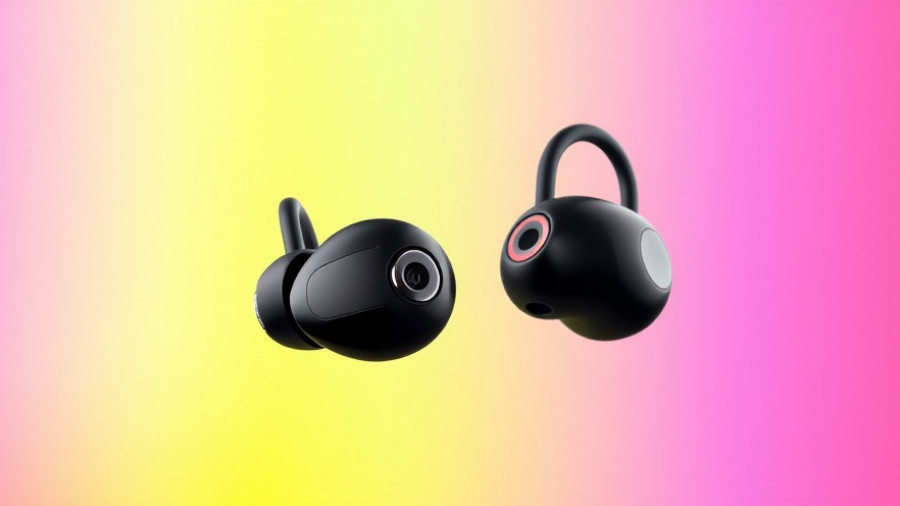
Baseus Inspire XC1 earbuds review with sleek design and vibrant background.

Exploring the Baseus Inspire XC1: A Revolutionary Open-Ear Experience

For those weary of traditional earbuds, the Baseus Inspire XC1 may just be the breath of fresh air you've been looking for. With an innovative open-ear design crafted in collaboration with Bose, these earbuds offer both comfort and sound quality, setting them apart in a growing market.

The Comfort Factor: Why Open-Ear Design Reigns Supreme

Open-ear earbuds like the Inspire XC1 bring about two significant advantages over traditional closed designs: superior comfort and situational awareness. Their unique construction allows them to rest outside of the ear canal, making them less intrusive and more comfortable for extended listening sessions. In fact, users report they hardly notice wearing them even after three hours—an impressive feat for anyone.

Crystal Clear Sound: A Partnership with Bose

Partnering with Bose, Baseus has elevated the audio experience with the Inspire XC1. While some may question the audio fidelity of open-ear designs, the collaboration ensures that users enjoy vibrant sound quality without compromising on environmental awareness. Unlike other models that might muffle your voice during calls, the Inspire XC1 allows for clarity and connection, enhancing the phone call experience.

Durable and Smart: Features that Matter

With an IP66 rating, the Inspire XC1 earbuds are both dust and water-resistant, ensuring they withstand different environments. Users appreciate robust features like customizable controls through an app, Bluetooth multipoint connectivity, and automatic play/pause functions when removing or wearing the earbuds again. Each control button is easy to click with gloves on, unlike the often frustrating touch controls of other earbuds.

A Competitive Landscape: How Do They Compare?

As the market for open-ear earbuds grows, competitors like the Sony LinkBuds and Apple AirPods 4 are also striving for user attention. The LinkBuds, designed for comfort and lightness, may appeal to urban commuters; however, they generally don’t offer the same auditory richness as the Baseus Inspire XC1. Meanwhile, the AirPods 4 provide the advantages of active noise cancellation but may not be as effective for those prioritizing open sound.

Conclusion: Opening Up to New Possibilities

Ultimately, the Baseus Inspire XC1 earbuds are positioned well in a landscape teeming with open-ear competitors. For those looking for a comfortable listening experience that allows awareness of one’s surroundings—be it during workouts, commuting, or even casual conversations—these earbuds deliver a harmonious blend of usability and superior sound. With innovations continuing to roll out in the realm of personal audio devices, we can expect even more exciting advancements in the near future.

Tune in to your surroundings without losing the music. The Baseus Inspire XC1 might just be the next must-have in your tech arsenal!

Tech Trends

23 Views

0 Comments

Write A Comment

*
*
Related Posts All Posts
12.17.2025

Why Amazon's $10 Billion Investment in OpenAI Could Transform the AI Landscape

Update Amazon's Ambitious Bet on OpenAI: A Game Changer in AI InvestmentIn a move that could reshape the landscape of artificial intelligence, Amazon is reportedly in talks to invest up to $10 billion in OpenAI. According to sources, this potential investment would substantially value OpenAI at over $500 billion, marking a significant milestone for the AI lab. This development comes as Amazon seeks to diversify its presence in the AI sector, which has increasingly become a competitive race among tech giants.The Circular Deal Phenomenon in AIThis potential collaboration fits within a broader trend of circular deals in the AI industry, where tech companies like Amazon not only invest in AI startups but also procure their services and products. For instance, Amazon's latest chips, the Trainium series, are designed to support AI operations and could play a vital role in OpenAI's future development. Such arrangements allow both Amazon and OpenAI to leverage each other's strengths, creating a symbiotic relationship.A Shift Post-For-Profit TransitionOpenAI's recent transition to a for-profit model has opened new avenues for partnerships beyond its foundational backer, Microsoft. With this shift, OpenAI can enter discussions with more potential investors, including Amazon, allowing for innovative financing structures that could enhance its growth in an already dynamic field. Having already formed alliances with major chip manufacturers like AMD and Nvidia, OpenAI is positioning itself as a hybrid platform for emerging AI technologies.Future Implications for AI DevelopmentThe ramifications of Amazon's investment extend beyond mere financial figures. As both companies align their technology and products, the AI sector could witness accelerated advancements, spurring innovations at an unprecedented pace. Stakeholders and consumers alike will likely benefit from faster deployment of AI tools and services, enhancing daily operations and overall business efficiency.The Competitive Landscape of AI InvestmentsAs companies like Amazon and Microsoft continue to compete for leadership in AI, we can expect further consolidation within the industry. Amazon’s investment in OpenAI could also prompt rival tech firms to explore their own partnerships and investments, thus potentially increasing competition and innovation across different AI domains. These shifts will be crucial for consumers, as advancements in AI technologies can lead to improved products and services.

12.17.2025

Apple's Ingenious Initiative: How Bacon Packaging is Leveling Up US Manufacturing

Update Apple’s Unconventional Approach to Manufacturing Support In a surprising turn of events, Apple's engineers have been delving into the world of bacon packaging, not as a customer or supplier, but as a mentor. This initiative is part of the Apple Manufacturing Academy, which aims to elevate the manufacturing sector in the U.S. by providing hands-on support to small and medium-sized enterprises. The academy recently collaborated with ImageTek, a small Vermont manufacturer, to enhance their quality control processes by utilizing AI-driven technology to spot errors in packaging labels. Redefining Partnerships for Mutual Growth According to Marji Smith, president of ImageTek, this partnership has proven invaluable, emphasizing that even in a niche market, the influence of a technology titan like Apple can make significant waves. ImageTek's unexpected collaboration highlights a model where large corporations lend their expertise to bolster smaller operations, enhancing both product quality and economic resilience. Insights from the Apple Manufacturing Academy The Apple Manufacturing Academy, launched in Detroit, has set an ambitious goal of investing $600 billion in U.S. manufacturing by 2028. The academy not only provides technical support but also fosters a community through workshops and networking opportunities. With the recent launch of their virtual programming designed for small businesses nationwide, the academy is expanding its reach, making advanced manufacturing training accessible regardless of geographical boundaries. Addressing the Skills Gap in Manufacturing Sabih Khan, Apple’s COO, pointed out that strengthening American ingenuity through innovation is essential. The manufacturing sector is evolving, and the integration of smart technologies is crucial for competitiveness. Workshops at the academy cover critical topics such as predictive maintenance and machine learning, equipping participants with the skills they need to thrive in a rapidly changing landscape. The Takeaway: A Brighter Future for Manufacturing As Apple ventures into uncharted territory by supporting smaller manufacturers, it’s clear that collaboration can bridge gaps in knowledge and resources. The ultimate goal is not just to enhance productivity but to create sustainable pathways for future innovations in U.S. manufacturing. With continued investment and training, small businesses can emerge stronger, paving the way for a thriving competitive market.

12.16.2025

Why Consumer AI Startups Struggle: Insights from Venture Capitalists

Update Why Are Most Consumer AI Startups Struggling? As we near the third anniversary of the generative AI boom, many consumer AI startups find themselves in a precarious position. While businesses eagerly adopt AI solutions, many specialized consumer applications are failing to build sustainable business models. Chi-Hua Chien, co-founder and managing partner at Goodwater Capital, notes that early applications in areas such as video and photo editing were "super cool" but lacked staying power and have largely vanished from relevance. He sounds a cautionary note, likening these early AI applications to the flashlight app that initially captivated users but was quickly integrated into iOS itself, suggesting that standalone apps are vulnerable to being absorbed into larger platforms. Consumer AI Opportunities: Is Stabilization on the Horizon? Chien and Elizabeth Weil, founder and partner at Scribble Ventures, highlight the necessity of stabilization for robust consumer AI products to emerge. Chien draws parallels to the early mobile landscape, asserting, "We’re right on the cusp of the equivalent to mobile of the 2009-2010 era," a period that birthed transformative companies like Uber and Airbnb. With technologies like Google’s Gemini now competing on par with ChatGPT, we may be seeing preliminary signs of the stabilization needed for breakthrough consumer AI applications. The Limitations of Current Devices in AI Integration Another intriguing perspective offered by the VCs revolves around the limitations of existing consumer hardware. Chien observes that it's unlikely that smartphones—which users consult hundreds of times a day, yet often only capture a fraction of their environment—will facilitate the full range of potential AI use cases. Chien and Weil argue that ambient devices may be necessary to facilitate a more seamless interaction between users and AI applications. Notably, projects are already underway, such as OpenAI and Jony Ive's rumored screenless device, and Meta's AI-integrated Ray-Ban smart glasses. Paths to Success for Consumer AI Startups Despite the current challenges, the conversation indicates promising directions for future consumer AI startups. Options lie in creating unique applications such as personalized financial advisers or specialized educational tools that address real consumer needs. Importantly, both VCs caution against AI-driven social networks that prioritize algorithms over human interaction, acknowledging the critical importance of genuine human connections in social platforms. The Future of Consumer AI: A Leap Forward or a Slow Burn? For those looking to establish lasting businesses in the consumer AI space, the discussion underscores several key insights. Startups should focus on creating distinctive value propositions that can't be easily co-opted by larger tech firms. As we watch the landscape evolve, what may initially look like a stagnation in consumer AI startups could, in fact, be laying the groundwork for a transformative breakthrough in the years to come.

Terms of Service

Privacy Policy

Core Modal Title

Sorry, no results found

You Might Find These Articles Interesting

T
Please Check Your Email
We Will Be Following Up Shortly
*
*
*