
cropper
update
Strategy Advantedge
update
  • Home
  • Categories
    • Smart Living
    • AI Integration
    • Tech Trends
    • Home Automation
    • Eco Solutions
    • DIY Projects
    • Expert Insights
April 09.2025
2 Minutes Read

How Brinc Drones Is Revolutionizing Police Emergencies with Tech

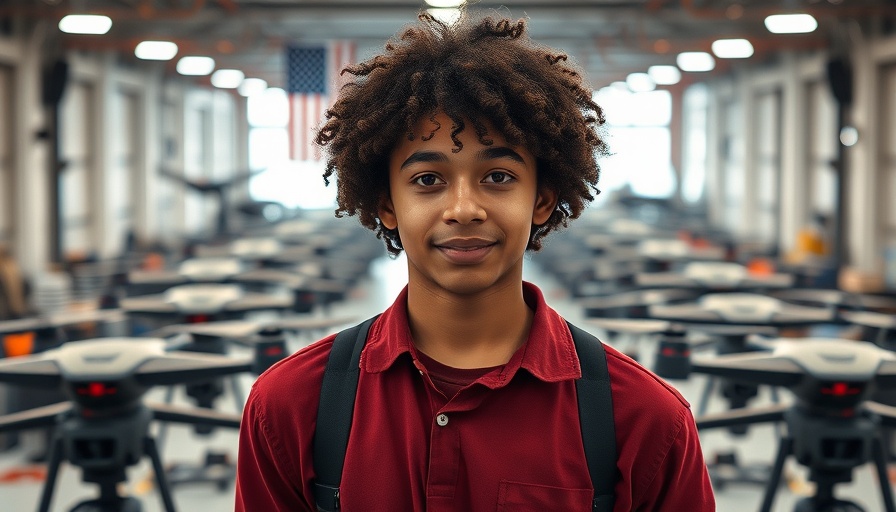
Brinc Drones funding for police technology, innovative workshop with drones.

The Rise of Brinc Drones: Innovating Public Safety

In an era where technology continues to redefine traditional safety measures, Blake Resnick, the 25-year-old founder of Brinc Drones, is leading the charge in developing drone solutions for police and public safety agencies. Recently, Brinc garnered attention by raising $75 million in funding led by Index Ventures. This round of funding adds to its previously raised total, bringing the company’s aggregate funding to nearly $157 million. Resnick’s vision is not just about creating drones; it's about revolutionizing how emergency services operate.

Transforming Emergency Response

The potential for drone deployment in emergency situations is monumental. Imagine calling 911, and before seeing a police cruiser, a drone equipped with essential tools arrives first. This is where Brinc Drones steps in, enabling first responders to act quicker and more efficiently. Partnerships, like the one recently announced with Motorola Solutions, are crucial for integrating drone technology into existing emergency infrastructures, ensuring operators can utilize drones swiftly within the framework of 911 call centers.

Competitive Landscape in U.S. Drone Startups

Brinc isn't alone in this evolving landscape. With competitors like Flock Safety and Skydio, who have also launched ambitious drone projects for law enforcement, the market is heating up. However, Resnick emphasizes a growing vegan market capable of embracing more entrants, especially as regulations against international competitors mount.

Future Potential and Public Safety

The future for Brinc and its drones looks promising, especially as issues surrounding public safety and efficient emergency responses take center stage. With unique features such as the ability to break windows during rescue missions and deliver medical devices during critical moments, Brinc asserts its commitment to innovation. As Resnick and his team continue to explore growth opportunities, they are poised to redefine how law enforcement engages in community safety with aerial assistance.

Tech Trends

17 Views

0 Comments

Write A Comment

*
*
Please complete the captcha to submit your comment.
Related Posts All Posts
07.16.2026

Texas Tesla Crash Raises Concerns About Driver Accountability and Safety

Update Tragic Tesla Incident: A Deeper LookIn a devastating incident that unfolded in Katy, Texas, a Tesla driver pressed the accelerator to 100%, causing the vehicle to crash into a house and tragically claiming the life of 76-year-old Martha Avila. This incident has reignited concerns over the safety of advanced driver assistance systems (ADAS) like Tesla's Full Self-Driving (Supervised) software. Preliminary reports from the National Transportation Safety Board (NTSB) confirm that the Tesla was traveling over 70 miles per hour in a residential area with a speed limit of only 30 mph, signaling a crucial failure of the system and driver oversight.Tesla has maintained that their technology was not to blame for the incident, citing evidence that the driver was in control of the vehicle prior to the crash. Indeed, the NTSB's report indicates that the driver had engaged the Full Self-Driving system in a typically safe setting, but vital checks on attentiveness are mandatory. Questions linger about the accountability of both the user and the manufacturer, especially considering the driver's alarming internet search history, which included queries about Tesla's FSD settings and performance.Key Takeaways: Understanding ADAS LimitationsThe ramifications of this incident extend beyond the tragic loss of life. As consumers and car manufacturers embrace sophisticated technology, it's critical to understand the limitations inherent in these systems. Tesla's insistence that their Full Self-Driving software operates within safe parameters underscores the need for comprehensive driver training and awareness. This quintessential accident draws attention to the essential requirement for drivers to remain engaged and attentive, irrespective of the technological advancements at their disposal.Legal Consequences and ChargesThe aftermath of the crash has already unfolded in the legal arena, with the family of Avila filing a lawsuit against the driver, Michael Butler, who has been charged with manslaughter. This tragic event illustrates not only the immediate repercussions of distracted driving but also raises questions about the responsibility of vehicle manufacturers in ensuring that their technologies are not just cutting-edge, but also safe for everyday use.Moving Forward: The Future of Autonomous DrivingAs the investigation by both NTSB and the National Highway Traffic Safety Administration continues, it presents an opportunity for discussions about the future of autonomous driving. Stakeholders must weigh how these technological innovations can coexist with human responsibility to avoid further tragedies. This incident serves as a clarion call for stricter regulations and more effective education about the necessity of manual oversight even in the age of advanced driver automation.

07.16.2026

Unlocking the Secrets of Baby Learning: What AI Can Learn

Update Why Babies Can Teach Us About AIIn a world increasingly reliant on artificial intelligence, comparing AI to the intricate learning abilities of babies might seem counterintuitive. Yet, cognitive scientists argue that these tiny humans are extraordinary at learning and understanding the world around them. Unlike AI systems that need enormous amounts of data and energy, babies learn efficiently from just a handful of experiences, showcasing an adaptive learning model that scientists are keen to replicate.The Lessons of the Baby BrainRecent research, including explorations conducted by teams from renowned institutions like Stanford University and Meta, has prompted the development of the EgoBabyVLM Challenge. This initiative attempts to evaluate whether AI can mimic the observational learning skills of infants. AI models, which typically fall short when interpreting real-life situations, are challenged to learn from video footage capturing the world through a baby's eyes. Surprisingly, these models performed poorly in processing the chaotic sensory information, sparking questions about fundamental differences in learning architecture between babies and AI.Implications for Future AI DevelopmentThe insights gained from studying babies may pave the way for smarter, more efficient AI systems. Recognizing that babies derive knowledge not just through language but also through rich sensory experiences calls for an evolution in AI architecture. This could potentially lead to AI that learns more like humans, resulting in systems that are both less resource-intensive and capable of better understanding their environments.Common Misconceptions and The Way ForwardOne misconception about AI is that it will inevitably surpass human intelligence in all respects. However, the evolving insight around the learning habits of babies emphasizes that there are vast areas where AI still struggles. As researchers strive to bridge this gap, they remind us to appreciate the depth of human intelligence and the unique qualities of human learning.

07.16.2026

Why AI Isn’t Smarter Than a Baby Yet: Understanding Limitations

Update The Limitations of Artificial Intelligence Despite significant advancements, artificial intelligence (AI) does not yet approach the cognitive abilities of a human baby. Researchers have discovered that infants excel in aspects like understanding context and social cues, areas where AI currently falls short. For instance, while AI systems can process information at lightning speed, they often struggle with tasks that require an understanding of nuance and emotion. Why Babies Are Amazing Learners Newborns exhibit impressive learning capabilities from a very young age, utilizing their experiences to develop complex social interactions. Observations reveal that while a baby can discern between different emotions, AI still relies heavily on programmed algorithms and lacks genuine emotional intelligence. This invaluable ability not only helps babies learn from their environment but also fosters connections with others, something that AI cannot replicate as efficiently. The Future of AI Development The race to develop smarter AI continues, with researchers emphasizing the need for machines that can understand human emotions and social dynamics. As AI technology evolves, it is crucial to focus on integrating emotional recognition and context-awareness into AI systems. This will help create technologies that complement and enhance human experiences rather than simply automate tasks. By doing so, we might eventually reach a point where AI can truly understand and foster meaningful connections. Embracing Our Humanity While the tech world continues to push boundaries, it’s essential to appreciate what makes us human. Babies remind us that the ability to connect, empathize, and grow goes beyond raw data processing. As we look to the future of AI, let’s embrace our unique capabilities while encouraging innovations that prioritize emotional intelligence and enhance our quality of life.

cropper
update
WorldPulse News
cropper
update

Write a small description of your business and the core features and benefits of your products.

  • update
  • update
  • update
  • update
  • update
  • update
  • update

COMPANY

  • Privacy Policy
  • Terms of Use
  • Advertise
  • Contact Us
  • Menu 5
  • Menu 6

+15192429456

AVAILABLE FROM 8AM - 5PM

City, State

1795 Avon Dr, Belmont, ON

ABOUT US

Write a small description of your business and the core features and benefits of your products.

© 2024 CompanyName All Rights Reserved. Address . Contact Us . Terms of Service . Privacy Policy

Terms of Service

Privacy Policy

Core Modal Title

Sorry, no results found

You Might Find These Articles Interesting

T
Please Check Your Email
We Will Be Following Up Shortly
*
*
*