
cropper
update
Strategy Advantedge
update
  • Home
  • Categories
    • Smart Living
    • AI Integration
    • Tech Trends
    • Home Automation
    • Eco Solutions
    • DIY Projects
    • Expert Insights
March 18.2025
3 Minutes Read

Maximize Your Smart Home Insights: Reading Utility Meters with SDR Technology

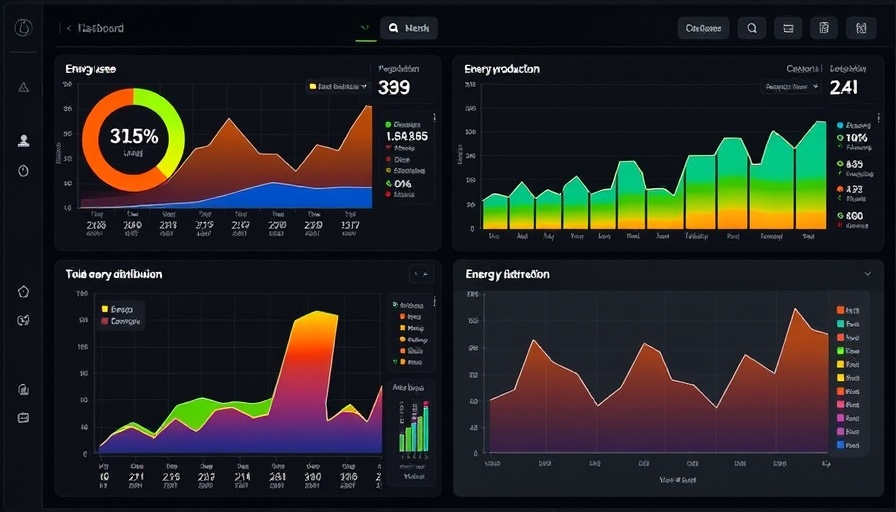
Dashboard with colorful energy usage and solar production graphs, reading utility meters with SDR.

Unlocking Home Automation: Monitoring Utility Meters with SDR

In an age where technology intertwines with our daily routines, the pursuit of smarter living has never been more accessible. DIY enthusiasts and tech-savvy homeowners are increasingly looking for innovative ways to enhance their home automation systems. One inspiring example is Jeff Sandberg, who has ingeniously combined solar features with software-defined radio (SDR) technology to gain a fuller understanding of his household energy consumption.

Understanding Home Energy Consumption

Jeff's journey began with a common issue faced by many homeowners who have adopted renewable energy sources. While his solar and battery systems were integrated with open-source automation software, such as Home Assistant, they captured only a fraction of his home’s energy usage. Key appliances, receiving power directly from the grid, were overlooked, leaving significant gaps in performance data.

To remedy this, Jeff turned to his RTL-SDR – a cost-effective tool that can receive and decode data from utility smart meters broadcast in the 900 MHz band prevalent in the U.S. With this setup, Jeff successfully accessed real-time data from his electric meter, effectively piecing together a comprehensive view of his home’s energy profile.

Integration Challenges and Solutions

While accessing meter data via SDR is technically straightforward, integrating it into an existing smart home system can be challenging. Jeff’s application of the RTL-SDR was not just an out-of-box use case; it required a specific implementation that aligned with his unique home wiring and energy setup. For those looking to follow in his footsteps, Jeff’s detailed documentation serves as an invaluable resource. His documentation outlines not only the technical setup but also troubleshooting tips for syncing smart meters with home automation platforms.

The Potential Beyond Electricity

What’s truly exciting about Jeff’s approach is its scalability. The successful integration of electricity monitoring provides a template for similar applications in tracking gas and water usage. With a little ingenuity, homeowners can leverage this technology to create detailed resource consumption profiles, allowing for greater energy efficiency and enhanced sustainability in their daily lives. As energy costs continue to rise, understanding usage patterns is crucial.

Security Considerations in Smart Meter Data

Yet, there are concerns worth noting as homes evolve into smarter entities. The lack of encryption on many utility meters' broadcasts raises valid questions around privacy and potential misuse of energy data. As these technologies become more widely adopted, developers and users alike must advocate for improved security measures to protect personal information from unwanted scrutiny.

DIY Takeaways for Homeowners

For those embarking on a DIY home automation journey, Jeff's experience is both a guide and a reminder of the creativity inherent in solving modern problems with technology. Tools like RTL-SDR present an exciting opportunity to not only monitor home energy consumption but also inspire a community-oriented approach to tech innovation. If you’re interested in improving your home’s efficiency and intelligence, diving into SDR might just be the first step toward smarter living.

In conclusion, as more people begin to explore these technologies, sharing insights and experiences will build a stronger community of informed and engaged homeowners ready to embrace a smarter, sustainable future. Don’t hesitate to explore and push the boundaries of what's possible!

AI Integration

115 Views

0 Comments

Write A Comment

*
*
Please complete the captcha to submit your comment.
Related Posts All Posts
06.12.2026

ChatSee.ai Raises $6.5M to Address AI Agent Failures: A Necessary Step Forward

Update Understanding AI Agent Failures: A Critical Investment Perspective The recent $6.5 million funding round for ChatSee.ai, led by True Ventures, highlights a pressing issue within the rapidly evolving AI landscape: the alarming failure rates of AI agents in production environments. As innovative startups like ChatSee.ai aim to address these shortcomings, it's vital to understand the factors driving these failures and how the operational landscape for AI is shifting. The Scale of the Problem According to a study, nearly 95% of AI agent projects fail before they can achieve meaningful production outcomes. Factors contributing to this high failure rate include inadequate planning, integration issues, and difficulties in task execution in real-world settings — what the industry refers to as the 'Demo-to-Production Death Valley'. Even well-funded endeavors sometimes buckle under the weight of complex tasks that seem straightforward in controlled environments. True Ventures and Its Vision True Ventures has made substantial investments in AI technologies, seeing the potential for AI as a fundamental layer that will transform numerous sectors. True's funding reflects a long-term bet that overcoming these operational challenges in AI is possible, and that future AI applications can mitigate the high failure rates currently seen. Their seasoned perspective, built over years in venture capital, positions them uniquely to identify and nurture startups like ChatSee.ai that are focused on solving such intricate problems. Learning From Failures: The 10% That Succeed A standout feature of the landscape is that nearly 10% of AI projects do overcome the odds and succeed. Anshumanj's insights into the survival rates of AI agents show that successful implementations share several characteristics: robust architectural design, a focus on governance, adaptive learning, and strategic assessment of tasks. Companies that treat their AI systems as critical infrastructure, investing in safeguards and capable frameworks, are tenfold more likely to achieve the desired outcomes. What Lies Ahead for AI Agents? The future of AI agents hinges significantly on refining development processes, notably through enhancing their governance frameworks, operational observability, and reduction in failure rates. Venture capitalists like those at True Ventures recognize that while today's environment presents a myriad of challenges, it also fosters invaluable opportunities for innovation and responsible AI deployment. Why This Matters to All Stakeholders For businesses, understanding AI's evolving landscape is crucial for strategic planning and investment. As AI technology matures, addressing its pitfalls not only increases the likelihood of success but also ensures trust among users and stakeholders. Startups like ChatSee.ai play a pivotal role in this journey. Their mission aligns with the broader imperative to build reliable AI solutions that persist in the face of operational chaos. Ultimately, as new players like ChatSee.ai secure funding and enter the marketplace, they are not just riding a trend but actively tackling systemic challenges, which is essential to the sustainable growth of AI integration across industries.

06.12.2026

AI Agent Failures: ChatSee.ai's $6.5M Solution to a Compelling Crisis

Update The Urgent Need to Address AI Agent Failures In an era where artificial intelligence (AI) is rapidly permeating enterprise operations, a pressing issue looms: the high failure rate of AI agents. Recent developments in AI funding have shed light on this concern, as seen with ChatSee.ai's recent $6.5 million funding round led by True Ventures. This investment aims to create solutions that effectively tackle the multifaceted problem of AI agent failures, which have been estimated to occur between 70% and 95% in actual production environments. The Statistics Behind AI Agent Failures It is critical to understand the alarming statistics surrounding AI agent performance. Research indicates that approximately 88% of AI agent projects fail to reach production environments, leading to significant financial wastes, estimated around $340,000 for each failed project. The challenges are often not technical; instead, they stem from organizational structures, scoping issues, and integration complexities. When AI agents handle tasks beyond their capabilities or are fed incomplete data, failure becomes almost inevitable. Why AI Agents Struggle in Real-World Settings There are several identified patterns that contribute to the frequent failures of AI agents in practical applications. One such pattern is scope creep, where initial well-defined objectives expand into overly complex tasks without adequate infrastructure. Moreover, the quality of data used for training these models significantly impacts their effectiveness. AI agents often operate based on clean, curated datasets during testing, leading to a drastic decline in performance once introduced to real-world variability. Poor data integrity can lead agents to make compounded errors that propagate through dependent systems, further exacerbating the impact of failed performance. Funding Solutions to Improve AI Reliability The recent financing received by ChatSee.ai reflects a growing recognition of the importance of addressing AI agent failures. By improving reliability in AI systems, organizations could not only safeguard their investments but also enhance overall operational efficiency. Solutions proposed include establishing human-in-the-loop systems, which preserve oversight on AI decisions, and implementing rigorous data quality assessments that aim to ensure that inputs meet specific standards before agents are deployed. The Future: Toward More Reliable AI Agents Looking ahead, the evolution of AI agents must prioritize frameworks that enable them to function effectively in real-world environments. Establishing systematic approaches that focus on preemptive measures can prevent many of the issues currently faced. Organizations should consider adopting standardized practices in AI deployments, including comprehensive performance reviews and feedback mechanisms that inform continuous improvement. If the technology can adapt rapidly to meet organizational needs while maintaining reliability, the potential for transformation in enterprise operations remains immense. Final Thoughts As AI continues to revolutionize business landscapes, the focus on developing robust and reliable AI agents must intensify. The significant funding by ChatSee.ai signals a commitment to transforming how these technologies are designed and used, potentially constituting a turning point in reducing the staggering failure rates of AI agents in production.

06.11.2026

Understanding AI Cost Management: Flexera's Pioneering Solution Explained

Update The Rising Costs of AI: A Crisis Unfolding As businesses increasingly integrate artificial intelligence (AI) into their operations, the financial implications of AI deployment have become a pressing concern. Flexera recently launched a comprehensive AI Cost Management platform to address this escalating issue, which aims to provide organizations with a clear understanding of their AI-related expenditures. Understanding the AI Spend Landscape Flexera's new solution, unveiled at FinOps X 2026, aims to simplify AI cost management by delivering comprehensive visibility into AI expenses across various applications, models, and compute costs. The platform allows enterprises to track key expenses related to AI—such as token and usage costs—through a unified view, which is essential as usage rates grow rapidly without corresponding oversight. Chief Product Officer Becky Trevino noted, "When the cost of AI exceeds revenue growth, the business breaks, and AI transformation stalls." Companies without effective cost controls risk spiraling expenditures that can decimate annual budgets in mere months. Why FinOps Is Essential for AI Operations With AI rapidly becoming a core component of many businesses, understanding financial metrics associated with AI tools is critical. Flexera's approach aligns closely with the principles of Financial Operations (FinOps), which is designed to provoke smarter spending in tech-heavy environments. According to a recent analysis of top FinOps tools, organizations equipped with these platforms can realize significant savings through improved tracking and management of AI costs. Amnic, one such leading FinOps tool, provides detailed tracking of AI token spending, enabling teams to pinpoint where costs originate and how to optimize them effectively. This aligns with Flexera’s objective, illustrating the growing trend towards holistic financial transparency in AI usage. The Benefits of a Unified AI Cost Management Solution Flexera's platform includes innovative features, such as "FinOps Assist," which utilizes AI technology to provide actionable insights through natural language queries. This ensures that stakeholders can easily understand their expenditures and respond to discrepancies without advanced technical expertise. The need for such tools cannot be understated as enterprises find themselves grappling with complex multi-cloud environments and rising costs. Without proper management tools, organizations can easily lose track of their finances in the whirlwind of AI cost spikes and unpredictable spending patterns. Future Implications for AI Cost Management The introduction of platforms like Flexera heralds a new chapter in AI management. As organizations navigate the financial intricacies of integrating AI, having specialized tools that offer visibility, governance, and optimization capabilities becomes imperative. The opportunity for companies to enhance their AI-driven initiatives while controlling costs hinges on their ability to manage these expenses effectively. Overall, as AI technologies continue to evolve and become more integral to business processes, tools like Flexera's AI Cost Management solution will be key in alleviating the financial burdens associated with adopting these advanced technologies. If you're a decision-maker attempting to optimize your organization's AI expenses, consider exploring comprehensive management solutions to address the rising tide of costs in the AI landscape.

Terms of Service

Privacy Policy

Core Modal Title

Sorry, no results found

You Might Find These Articles Interesting

T
Please Check Your Email
We Will Be Following Up Shortly
*
*
*