Add Row
Add Element
cropper
update
Strategy Advantedge
update
Add Element
  • Home
  • Categories
    • Smart Living
    • AI Integration
    • Tech Trends
    • Home Automation
    • Eco Solutions
    • DIY Projects
    • Expert Insights
March 26.2025
3 Minutes Read

Honeybee Deaths Reach Record High: Understanding the Urgent Crisis

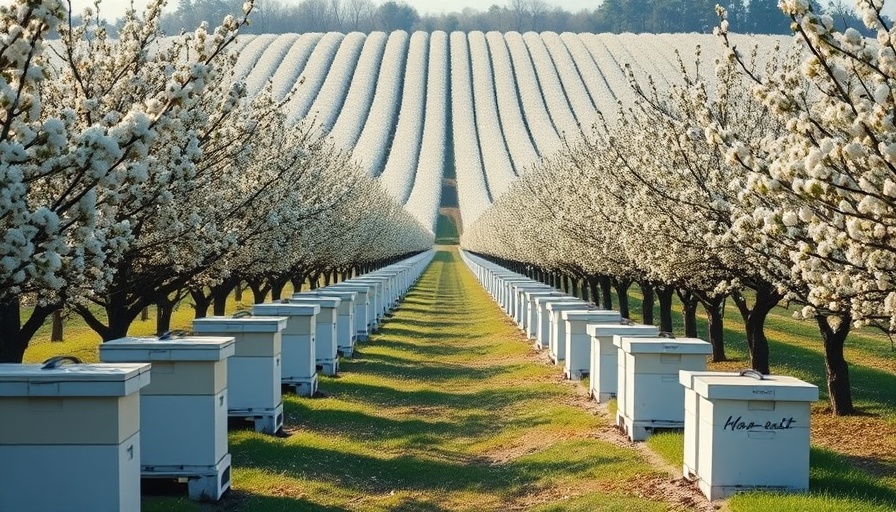
Blooming orchard with bee boxes reflecting honeybee deaths record high.

Record Highs: A Pricey Toll on U.S. Honeybee Populations

Honeybee deaths in the United States have surged to shocking levels, with recent figures indicating that commercial beekeepers have lost an average of 62 percent of their colonies this winter. Conducted by Project Apis m., a nonprofit organization focused on pollinator health, this survey captured responses from 702 beekeepers managing around 1.84 million colonies, amounting to about 68 percent of the nation's bee population.

According to the organization, these unprecedented losses have left a profound impact on the beekeeping industry and could threaten the pollination of essential crops across America. "The start of the 2025 almond pollination season was met with unprecedented colony losses," the organization stated. The ramifications of such a decline extend beyond just the beekeeping sector—it’s an issue with significant agricultural implications.

The Economic Impact: Counting the Cost of Colony Losses

The financial blow is staggering, with beekeepers reporting an estimated loss of $224.8 million in direct colony losses, based solely on a conservative replacement cost of $200 per colony. This figure does not account for the additional costs associated with feeding, labor, and treatments necessary for maintaining the health of the colonies.

“What do back-to-back losses mean? We already bought back in. We borrowed from our house, from our retirement, from family,” lamented one anonymous beekeeper. Such testimonies paint a stark picture of the emotional and financial toll these losses exact on those whose livelihoods depend on the health of honeybee populations.

The Growing Crisis and Future Implications

Beekeepers are no strangers to annual losses. However, the current trajectory suggests it may lead to the biggest loss of honeybee colonies in U.S. history. Scott McArt, an associate professor of entomology at Cornell University, commented on the troubling trend: "We have been seeing high losses year after year, but if anything, it's getting worse." This raises concerns not only for beekeepers but for food crops that depend heavily on bee pollination.

As the effects of climate change continue to ripple through ecosystems, the supply of forage for bees is steadily diminishing. Urban expansion, industrial farming practices, and harmful pesticide usage contribute to an environment that makes survival increasingly challenging for honeybees. The potential consequences for the agricultural sector are far-reaching. In some areas, almond orchards reported a shortfall in pollination, leaving questions about the viability of other crops in jeopardy.

Understanding the Need for Immediate Action

The high rates of hive loss are calling for urgent conversations about the necessary steps to protect honeybee populations and, by extension, food security. Engaging stakeholders from both the agricultural and environmental sectors is crucial. Potential solutions might include creating more bee-friendly habitats, implementing better farming practices, and promoting awareness about the importance of pollinators in our food chain.

The continuing decline of honeybee populations is not just an environmental issue—it's a pressing economic challenge that demands collective action. One key area for improvement is addressing the pesticide regulations that have been shown to harm bee populations. Moving towards more sustainable farming practices could play a pivotal role in reversing this worrying trend.

Collective Response to a Growing Threat

This alarming situation serves as a wake-up call for everyone involved in or affected by agriculture. With rising losses year after year, it's imperative that both caretakers and consumers advocate for measures that prioritize bee health. Ground-level engagement, from urban gardens to state and national policy changes, could create a network of support for bees.

Sustaining healthy bee populations is vital, not just for honey production, but for the resilience of our entire food system. Ample community engagement and legislative advocacy can help ensure that beekeeping remains viable and sustainable for future generations.

Eco Solutions

13 Views

0 Comments

Write A Comment

*
*
Please complete the captcha to submit your comment.
Related Posts All Posts
04.04.2026

How Smart Greenhouse Irrigation Transforms Agriculture for Future Sustainability

Update Revolutionizing Plant Care: How Smart Greenhouses are Changing Agriculture As the global population continues to surge towards the projected 10 billion by 2050, conventional farming methods are facing immense stress. Enter smart greenhouses—a pioneering solution that harnesses technology to enhance agricultural productivity, address the challenges of climate change, and conserve precious water resources. With cutting-edge features such as automated irrigation systems and real-time climate monitoring, these smart ecosystems are setting the stage for a sustainable agricultural revolution. Understanding Smart Greenhouse Technology At the heart of smart greenhouses are IoT-enabled devices that collect and analyze real-time data on a variety of environmental factors, including temperature, humidity, and soil moisture. This technology allows for precise adjustments that optimize growing conditions for plants. Unlike traditional methods, where farmers manually monitor and adjust these factors, smart greenhouses employ automation to regulate the environment, ensuring plants receive optimal care without excessive human intervention. Benefits of Implementing Smart Irrigation Systems One of the most compelling features of smart greenhouses is their intelligent irrigation systems. These systems utilize soil moisture sensors to assess the water needs of plants and adjust irrigation schedules accordingly, significantly reducing water waste. A recent study highlighted that greenhouse operations can cut water usage by up to 30% while elevating crop yield by nearly 25% through precision irrigation practices. This advancement not only contributes to resource conservation but also enhances the overall efficiency of agricultural practices. Harnessing Artificial Intelligence for Agriculture Integrating AI technology into greenhouse systems enhances their capability to predict environmental changes and adjust systems proactively. For instance, upcoming prediction models can analyze weather data, historical trends, and current sensor readings to forecast the microclimate of greenhouses. This not only optimizes conditions for plant growth but also prevents unnecessary energy consumption by adjusting heating or cooling systems based on real-time needs. Key Components of a Smart Greenhouse For optimal functioning, smart greenhouses comprise several essential components: Sensors: These are the backbone of greenhouse operations, providing real-time data on crucial parameters such as soil moisture, light intensity, and air quality. Automated Controls: These systems respond dynamically to the data gathered, regulating irrigation, ventilation, and temperature without human intervention. Data Management Systems: Crucial for integrating various data feeds, these systems manage cloud-based analytics for streamlined decision-making. Challenges in Adopting Smart Greenhouse Solutions Despite their many advantages, transitioning to smart greenhouse systems is not without its hurdles. Initial capital investment can be a significant barrier, as high-quality sensors and IoT infrastructure often require substantial funding. Furthermore, existing systems must be compatible with new technologies, necessitating careful integration to maximize efficacy. The Future of Smart Greenhouses Looking ahead, the integration of renewable energy sources and advanced AI will further enhance the sustainability of smart greenhouses. Innovations like solar-powered energy solutions and advanced machine learning algorithms promise to revolutionize how we approach agriculture, setting the stage for environmentally friendly practices that ensure food security. Conclusion: The Road to Sustainable Agriculture Smart greenhouses represent a remarkable convergence of technology and agriculture, paving the way for efficient, sustainable farming practices. By being proactive about resource management, these advanced systems not only boost crop yields but also play a vital role in combating climate change effects. As we advance into the future, embracing smart greenhouse technology will be crucial for addressing the pressing agricultural challenges ahead and ensuring a more sustainable world for generations to come. Discover how implementing smart greenhouse solutions can redefine agricultural practices and lead to improved resource efficiency and food security for our growing world. The future of farming is here, and it’s intelligent, sustainable, and smart!

08.06.2025

Why Understanding Methane Matters: The Powerful Greenhouse Gas

Update Understanding Methane: The Silent Contributor to Climate ChangeMethane, while not as widely discussed as carbon dioxide, plays a crucial role in our planet's climate crisis. As the second most powerful greenhouse gas, methane is responsible for approximately one-third of today's global warming. Recent studies indicate that atmospheric methane concentrations have surged by 256% since the pre-industrial era, underlining the urgency of addressing this issue.The Power of Methane Compared to CO2Methane’s potency as a greenhouse gas cannot be understated; over a 20-year span, it traps 86 times more heat per unit than carbon dioxide. However, methane’s existence in the atmosphere is short-lived compared to CO2, which can linger for centuries. This transient nature poses a unique opportunity: curbing methane emissions can yield rapid decreases in global warming effects.Sources of Methane Emissions: The Human ImpactHuman activities contribute significantly to methane emissions, accounting for about 60% of total emissions. The three major sources include fossil fuel extraction, agricultural practices, and waste management. Notably, fossil fuels alone are a dominant source, suggesting that advancements in energy technologies could substantially lower these emissions. For instance, existing technologies could potentially cut emissions from fossil fuel operations by 70%.Innovative Solutions to Reduce MethaneInterestingly, some low-cost solutions have emerged to combat methane emissions, particularly in agriculture. Research has shown that supplementing cattle diets with seaweed can lead to a staggering reduction in methane production—up to 82% in feedlot cattle. This measure not only aids in climate control but improves livestock health.Policy and Public Awareness: A Necessary ShiftDespite the clear potential for mitigation, only 13% of methane emissions are currently addressed by any form of reduced emissions policy. There is a critical need for comprehensive strategies to engage the public and policymakers alike. If the European Union, for example, could reduce meat and dairy consumption by just 34%, it might prevent around six million metric tons of methane emissions annually.Looking Ahead: A Call for ActionThe path toward reducing methane emissions is more than just about the science; it is about our choices and policies. We have the tools to make a significant impact, but they require collective action across various sectors. Ensuring that methane is tackled effectively will need not just technology but also a commitment from individuals and governments worldwide to reshape consumption patterns and enforce policies that favor emissions reductions.

08.05.2025

New York Sets A Precedent: All New Buildings to Be Electric-Only

Update New York’s Bold Step Towards Sustainability In an unprecedented move, New York has established itself as the leading state in the U.S. to require all new buildings to be powered entirely by electricity, eliminating fossil fuel connections. This transformative legislation, termed the All-Electric Buildings Act, officially received its stamp of approval in July 2025 and reflects a significant shift in environmental policy aimed at reducing greenhouse gas emissions from the state’s built environment. Understanding the Goals of the All-Electric Buildings Act The core objective behind the All-Electric Buildings Act is to tackle the alarming statistic that buildings account for approximately 31% of all emissions in New York. By mandating that most new constructions utilize electric power exclusively, the state aims to substantially lower these figures. Residential buildings up to seven stories tall and commercial structures measuring up to 100,000 square feet are required to comply, with deadlines set for December 31, 2025, and 2029, respectively. More than just an environmental measure, the legislation promises significant cost savings for residents, projecting reduced energy usage by about 17%, translating to nearly $5,000 saved for households over 30 years. A Historical Perspective on Fossil Fuel Regulations This bold decision follows a broader trend across the nation where cities and states are beginning to reevaluate their reliance on fossil fuels. Notably, California once led a similar initiative which faced legal barriers that ultimately stalled its progress. New York’s ability to pass such legislation reflects both a change in public sentiment towards climate action and a judicial support system that prioritizes community welfare over fossil fuel profits. The earlier court ruling that validated the All-Electric Buildings Act signals a growing shift in American judicial attitudes towards environmental policy. Counterarguments: Impacts on Various Industries While the act has been embraced by environmental advocates, it has also generated concern among certain industry stakeholders. Building trade associations and fossil fuel companies have expressed their opposition, arguing that transitioning too quickly could lead to job losses and increased construction costs. They raise issues about how this legislation may impact facilities essential to public health, such as laboratories and medical facilities, which can be exempted but still face challenges adapting to new standards. Future Trends in Building Construction As New York forges ahead, we can expect to see increased innovation within the construction sector. The act paves the way for advancements in building technologies focused on energy efficiency and renewable energy use, which could create numerous job opportunities in green technologies and sustainable construction practices. Additionally, developers may find that building all-electric structures could lead to cost savings, reducing overall expenses associated with installation of fossil fuel systems. Conclusion: The Path Forward for Sustainable Living New York's All-Electric Buildings Act represents a major milestone in the journey towards a sustainable future. As communities and stakeholders adapt to this paradigm shift, the potential benefits could be substantial, from cost savings on energy bills to increased environmental resilience. Recognizing the importance of this legislation highlights the significant role individual states can play in confronting climate change. Those interested in sustainable living should keep a close eye on New York’s developments, as they may inspire similar actions in their own communities.

Terms of Service

Privacy Policy

Core Modal Title

Sorry, no results found

You Might Find These Articles Interesting

T
Please Check Your Email
We Will Be Following Up Shortly
*
*
*