
Add Row
Add Element
cropper
update
Strategy Advantedge
update
Add Element
  • Home
  • Categories
    • Smart Living
    • AI Integration
    • Tech Trends
    • Home Automation
    • Eco Solutions
    • DIY Projects
    • Expert Insights
March 18.2025
2 Minutes Read

Unlocking the Potential: How AI Adoption Can Divide C-suites

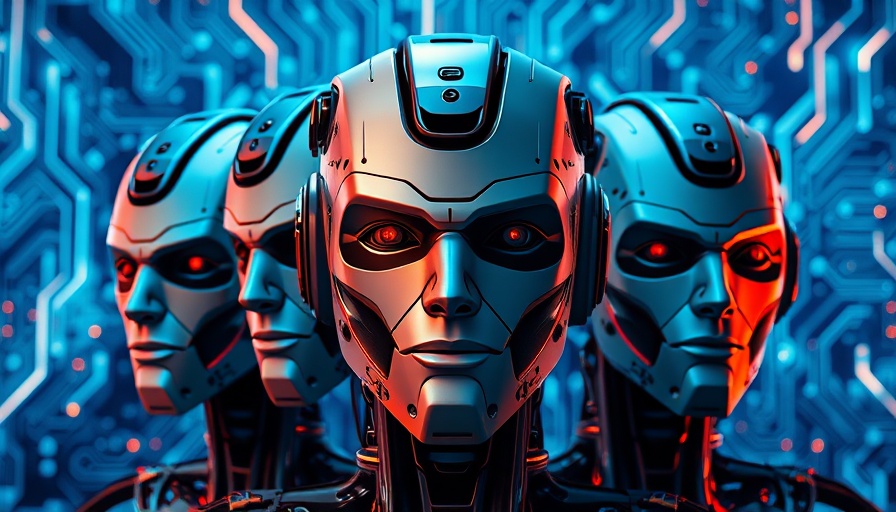
AI division in C-suite: robotic faces amid technological backdrop.

AI Adoption: A Double-Edged Sword for Businesses

As artificial intelligence continues to integrate into various sectors, a recent survey conducted by Writer and Workplace Intelligence highlights a growing concern among C-suite executives: 68% report that AI adoption has led to divisions within their organizations. These findings reflect the emerging complexities that businesses face in leveraging generative AI. While the technology promises efficiencies and innovations, it also brings challenges that can fracture workplace dynamics.

The Division Dilemma: Understanding Internal Tensions

The report indicates that generative AI has inserted new power dynamics among teams, often pitting IT departments against other business units, as well as executives against their employees. More than one-third of executives acknowledged that the adoption of generative AI has contributed to internal tensions, with a staggering 42% stating it has caused significant rifts within their companies. This discord can detract from overall productivity and morale, leading to further complications in implementing AI initiatives.

Optimism Amidst Challenges

Despite these challenges, there exists a prevailing optimism within the workforce. Survey results reveal that most employees using AI tools feel positive about their capabilities, with 77% identifying as potential AI champions. This contradiction illustrates a key opportunity for organizations: focusing on alignment and integration amongst various teams could harness AI’s potential more effectively. Strengthening collaboration can help bridge the gaps created by disparate perspectives on AI usage.

C-suite Awareness of Improvement Needs

Reflecting on these divisions, 95% of executives admitted that their companies need to enhance how they approach AI adoption. This self-awareness is crucial for fostering a culture that embraces technological change. Companies can adopt several strategies to mitigate divisions, including investing in shared AI training programs and ensuring that leaders from all departments understand the implications and potential of generative AI.

Building the AI-ready Workforce: Skills for the Future

As highlighted in a Deloitte report, the demand for C-suite executives to possess technical skills is growing. Organizations are seeking leaders who are not just able to navigate business strategies but also understand the nuances of AI technology. This shift necessitates ongoing education and upskilling to ensure that leaders can effectively manage AI-driven transformations. Establishing a formal upskilling program-oriented toward understanding AI and its integration can turn potential divisors into team players.

Conclusion: Navigating the Future of AI Integration

In summary, while the adoption of generative AI presents challenges that can lead to divisions within organizations, it also opens doors to considerable innovation. By fostering a culture of cooperation and continuous learning, companies can leverage this technology to its full potential. As the landscape of AI continues to evolve, understanding the delicate balance between technological advancement and human collaboration will be key to thriving in an increasingly digital world.

Take actionable steps today to align your workforce to navigate AI challenges effectively. Commitment to upskilling and collaboration can enhance your organization’s capability to integrate AI technologies while minimizing internal divisions.

AI Integration

9 Views

0 Comments

Write A Comment

*
*
Please complete the captcha to submit your comment.
Related Posts All Posts
04.10.2026

How Celonis and Oracle’s Partnership Will Revolutionize Enterprise AI Implementation

Update Celonis and Oracle Team Up for Enhanced Enterprise AI In a significant progression of their longstanding partnership, Celonis and Oracle have announced a collaborative effort aimed at powering enterprise AI and accelerating IT modernization. This partnership is poised to transform how businesses optimize their operations by leveraging Celonis’ Process Intelligence platform on Oracle Cloud Infrastructure (OCI). Streamlining Business Processes The integration of Celonis’ solutions with Oracle’s offerings allows joint customers to conduct detailed analyses of end-to-end business processes spanning crucial areas such as finance and supply chain management. By utilizing the advanced capabilities of Celonis on OCI, companies can enhance their AI-driven workflows, discover automation opportunities, and track the value realization over time. This creates not just efficiency but also encourages a culture of continuous improvement across the organization. The Importance of AI-Driven Workflows The modern business landscape demands robust, scalable, and secure infrastructure. As high-impact AI technologies develop, companies increasingly lean on platforms that support mission-critical workloads. Oracle’s infrastructure is designed specifically for such challenges, delivering the performance and reliability essential for running complex AI processes. With the added layer of Celonis’ process intelligence, organizations are equipped with a digital twin of their business operations, enabling deeper insights and a proactive approach to operational management. Converging Automation with Business Context At the core of this collaboration is the recognition that AI agents excel only when they are placed in the appropriate context. Bastian Nominacher, co-CEO of Celonis, emphasizes the importance of contextual data for AI effectiveness. The collaboration seeks to not only boost automation but to do so guided by real-time insights into the business, enhancing decision-making capabilities. This understanding helps bridge the gap between merely automating tasks and achieving autonomous execution that can drive significant business outcomes. Navigating the Risks of Legacy Migration As organizations face the reality of migrating from legacy systems, generating strategies for modernization becomes critical. Celonis Process Intelligence helps in analyzing, benchmarking, and mitigating risks associated with such migrations to Oracle Fusion Cloud ERP. This becomes especially crucial in establishing a clear roadmap that minimizes disruption while maximizing operational continuity. Looking Ahead: The Future of AI and Enterprise Solutions The growing demand for scalable AI infrastructure in enterprises indicates a trend towards optimization through advanced cloud solutions. As both Celonis and Oracle expand their offerings, businesses can expect not just tactical improvements but strategic advancements that shape the future of operational efficiency. Understanding these changes allows organizations to not only keep pace with technological advancements but also leverage them for a competitive edge. The partnership between Celonis and Oracle symbolizes a key advancement in organizational capabilities, fostering a shift towards intelligent enterprise solutions that are data-driven and contextually aware. As these technologies mature, organizations poised to embrace change will not only survive but thrive in an ever-evolving business environment.

04.09.2026

How ThoughtFarmer's AI Assistant Transforms Workplace Efficiency

Update Unlocking Knowledge: The Role of AI in Modern Workplaces Artificial intelligence (AI) continues to revolutionize the way companies operate, focusing on enhancing the employee experience and optimizing workflows. ThoughtFarmer has taken a significant step in this direction by launching its AI Assistant, part of a comprehensive three-part AI suite. This innovative tool is designed to help employees efficiently access their organization’s knowledge, improving productivity and collaboration. The Challenge of Information Overload In today’s fast-paced work environment, employees often face the challenge of information overload. They waste valuable time searching for policies, procedures, and points of contact. ThoughtFarmer addresses this issue by offering an AI Assistant that provides quick and cited answers sourced exclusively from internal documents. The system respects existing permissions, ensuring that employees only access information relevant to them, thus enhancing security and control. AI Assistant: A Game-Changer for Employee Productivity The AI Assistant not only answers questions about organizational processes but also personal inquiries about colleagues—where they work, their skills, and their roles. This feature streamlines communication and fosters a sense of connection within the organization, breaking down silos and enabling a more cohesive work culture. Darren Gibbons, President of ThoughtFarmer, notes the importance of this feature: "Employees want AI Assistant to find information about people, not just processes... We built in the ability to answer questions about colleagues’ skills, locations, departments, and contact details." With such capabilities, employees can invest more time in meaningful tasks instead of searching for answers. Building Trust Through Data Privacy Privacy is a crucial concern in the implementation of AI technologies. ThoughtFarmer takes a proactive approach by ensuring that customer data is never used to train third-party models. Their architecture allows organizations to maintain proprietary information securely within their environment, adhering to regional data sovereignty regulations. This commitment to security enhances user confidence in adopting AI solutions. Future Predictions: The Trajectory of AI in Business Looking ahead, the integration of AI tools like ThoughtFarmer's AI Assistant is poised to reshape workplace dynamics further. The shift towards specialized, context-aware AI solutions will enable businesses to harness technology more effectively. Companies that prioritize providing human-centric AI applications may find themselves better positioned to adapt to the evolving needs of their workforce. As AI continues to evolve, organizations must remain vigilant about security and ethical considerations while embracing the opportunities that AI presents. ThoughtFarmer’s balanced approach sets a precedent, advocating for innovation that is both responsible and practical. Practical Insights for Organizations To maximize the benefits of AI tools like the AI Assistant, organizations should consider the following: Encourage User Input: Regularly gather employee feedback to refine AI features and ensure they meet organizational needs. Implement Gradually: Roll out AI tools in phases to ensure smooth integration and allow time for adjustment. Focus on Security: Maintain stringent data privacy practices to bolster trust and encourage adoption of AI solutions. Conclusion: Embracing the Future of Work The advent of AI tools like ThoughtFarmer’s AI Assistant marks a pivotal moment in workplace technology. By bridging the gap between technology and human interaction, organizations can significantly enhance operational efficiency and employee satisfaction. As businesses navigate this transformation, embracing AI responsibly will be paramount to reaping its many benefits.

04.08.2026

Meet Panther: The Innovative Humanoid Robot Revolutionizing Household Tasks

Update The Rise of Domestic Robotics: Panther's Role in Household Innovation In a remarkable advancement for robotics, UniX AI has introduced Panther, a humanoid robot designed to perform various household tasks. This innovative robot marks the beginning of a new era in personal robotics as it begins to enter real homes for everyday deployment. Unlike traditional service robots that are often limited to industrial applications, Panther combines cutting-edge technology with practical usability, making it a viable option for assisting with domestic chores. Unpacking Panther's Unique Features At the heart of Panther’s design is its differentiated wheeled dual-arm architecture, offering significant advantages over legged robots. This configuration allows for greater mobility and stability, essential traits for navigating complex indoor environments. With its advanced 8-DoF bionic arms and high DoF joints, Panther is equipped to perform a wide array of actions—from cooking meals to organizing household items, catering to an emerging need for intelligent domestic helpers. Addressing Everyday Challenges with Intelligent Design Robotic systems like Panther are beginning to fill gaps in domestic assistance, especially for tasks that strain human capabilities, such as lifting heavy objects or executing multiple-step chores. The efficient design of Panther, which includes omnidirectional movement capabilities, is pivotal in addressing these challenges head-on. This shift from theoretical robotics to practical, everyday applications demonstrates not only technological advancement but also a societal change in how we perceive the integration of robots in our daily lives. The Growing Market for Household Robots The introduction of Panther comes amidst a burgeoning market for domestic robots. Similar to recent initiatives by companies like X Square Robot, which is merging automation with human partnership for domestic tasks, we see an increasing trend toward robots that can handle foundational chores. This collaboration of human intelligence and robotic efficiency is proving to be a game-changer for household dynamics. Human-Robot Collaboration: The Future of Domestic Assistance Panther's launch is not just about the technological marvel itself, but also about how humans and robots will work side by side. As emphasized by experts in the field, robots are best utilized in scenarios where they can complement human tasks—taking on repetitive, labor-intensive chores while humans focus on nuanced and intricate responsibilities. This collaborative approach to service work not only enhances efficiency but also improves the quality of life for users. Future Implications: A New Paradigm in Home Automation The deployment of Panther signifies more than just a new product; it is a bold step toward the widespread acceptance of robots in everyday life. As these technologies continue to develop, they promise to redefine our homes, making them smarter and more efficient. However, challenges remain, including safety, cost, and user acceptance, that must be navigated to ensure these innovations truly enhance domestic life and are embraced broadly by society. Conclusion: Embracing the Robot Revolution As we stand on the brink of a robotic transformation in household assistance, Panther is a symbol of what is possible when advanced robotics meet practical needs. For those interested in the evolving landscape of technology and its implications for domestic life, staying informed is crucial. As Panther begins its journey in real households, the insights gained from its implementation could shape the future trajectory of humanoid robotics.

Terms of Service

Privacy Policy

Core Modal Title

Sorry, no results found

You Might Find These Articles Interesting

T
Please Check Your Email
We Will Be Following Up Shortly
*
*
*